
Buildroid AI Wins a Global Recognition Award 2026
Construction has a productivity paradox. It is a $17 trillion global industry. Yet output per worker has barely improved over the past 50 years. Furthermore, over 500,000 US construction jobs remain unfilled today. Robots have been tried. They have largely failed — because they automate single tasks, hitting only 30% utilization. The economics never work. Buildroid AI found the answer. First, simulate the entire workflow using NVIDIA Omniverse digital twins. Then deploy coordinated robotic crews to a job site that has already been validated in simulation. to a job site that has already been The result: a block-laying robot delivering 30 m² per day — six times the output of a manual crew — automating 80% of masonry work systemwide. For that breakthrough, Buildroid AI has earned a 2026 Global Recognition Award.
Technical Innovation and Architecture
The Simulation-First Construction Platform connects BIM models to on-site execution through three layers. First, NVIDIA Omniverse builds a digital twin of every job site before deployment. Second, AI orchestration coordinates multiple robot types into unified workflows. Third, validated plans execute on hardware—across 40+ compatible robot types, fully hardware-agnostic. Consequently, Buildroid is not a single-robot product. It is a construction robotics operating system.
From Simulation to Site: 6× Productivity
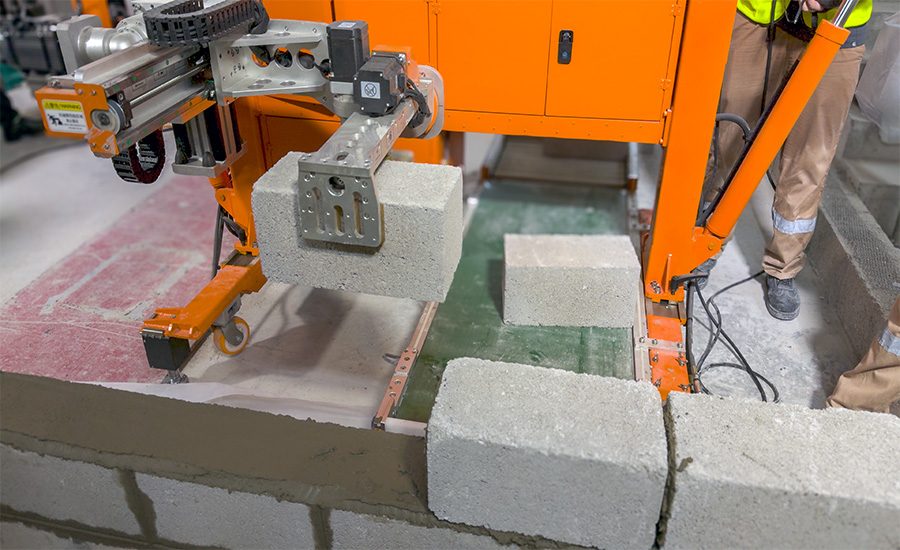
The first application is the automation of blockwork and partition walls. The block-laying robot produces 30 m² per day. By comparison, manual crews deliver 5 m². That is a 6× gain. Additionally, AMRs handle material delivery — eliminating manual support labor. Furthermore, pilots are live with ALEC Engineering in the UAE, and commercial US deployments began Q1 2026, targeting the $13 billion US blockwork segment.
Market Strategy and Leadership
Slava Solonitsyn is not a first-time construction founder. He previously co-founded Mighty Buildings, raising over $100 million and delivering 50+ 3D-printed homes, including the world’s first 3D-printed net-zero home. Furthermore, he is a repeat Y Combinator founder with $180M+ raised across ventures. Co-founder Anton Glance previously built Glance Clock, acquired by NeXtime. Consequently, both founders bring direct experience in construction robotics, hardware productization, and regulatory navigation — designing Buildroid specifically to avoid the failure modes of every previous construction automation attempt.
Capital and Commercial Structure
The $2 million pre-seed, led by Tim Draper (Tesla, SpaceX, Skype, Robinhood), was announced at the Big Five Construction Conference in November 2025. Moreover, the commercial model is performance-based: Buildroid receives 50% of net efficiency gains, committing to specific throughput and quality metrics. Therefore, revenue is tied directly to measurable contractor outcomes — removing deployment risk and accelerating adoption in an industry historically resistant to new technology.
Industry Impact and Future Vision
Over 500,000 US construction jobs are unfilled. The labor shortage is structural, not cyclical. However, Buildroid’s model is augmentation — not replacement. Specifically, robots handle heavy, repetitive, and precision-critical tasks while skilled workers supervise and coordinate. Furthermore, simulation-first reduces construction waste by catching material errors virtually. Consequently, every deployment simultaneously improves safety, productivity, and sustainability, eliminating manual labor.
The roadmap extends from blockwork into interior fit-out, structural workflows, and a third-party robot marketplace — turning Buildroid into the operating layer for the entire robotic construction industry. Most importantly, the NVIDIA Omniverse foundation means simulation quality compounds over time. Buildroid AI earns the 2026 Global Recognition Award for solving what 50 years of construction automation attempts could not: coordinated, simulation-validated robotic workflows that make construction six times more productive — and safer for the workers who build the world.
Simulation-First Construction Platform: NVIDIA Omniverse digital twin validates all robotic workflows virtually before field deployment — eliminating on-site failure risk that capped previous solutions at 30% robot utilization
BIM-to-BUILD pipeline: connects Building Information Models directly to on-site robotic execution through AI orchestration software — no manual translation between design and deployment
40+ robot types supported: fully hardware-agnostic architecture enabling expansion across blockwork, interior fit-out, structural, and future construction workflows without rebuilding core software
Block-laying robot (BLR) + AMR coordination: robot lays blocks while AMRs autonomously deliver concrete from pallets — full trade sequence automation, not isolated single-step robotics
80% of masonry work automated systemwide: platform addresses full trade sequence coordination, raising system-wide robot utilization above the 30% ceiling of single-task competitors
Third-party robot marketplace roadmap: platform designed to open to external manufacturers — enabling testing and refinement of new machines in simulation before field pilots
6× productivity over manual crews: 30 m²/day (robot) vs. 5 m²/day (mason + helper) — the most specific construction productivity gain claim in the sector
UAE pilots live with ALEC Engineering & Contracting: one of the UAE’s top general contractors, validating the platform in active production environments
Q1 2026 US commercial deployments: signed agreements with leading US general contractors — market entry immediately following UAE validation
$2 million pre-seed led by Tim Draper: Draper Associates portfolio includes Tesla, SpaceX, Skype, and Robinhood — highest-signal pre-seed lead in construction robotics
Shared-savings model: Buildroid receives 50% of net efficiency gains while committing to specific throughput and quality metrics — performance-aligned revenue, not hardware sales
US market entry from stealth November 2025 following UAE validation — disciplined geography sequencing from proof market to scale market
$17 trillion global construction market: the world’s largest un-automated primary industry — and the one with the lowest productivity growth of any sector over 50 years
$13 billion US blockwork segment: first application targets a large, clearly defined sub-market within the broader construction opportunity
UAE’s $42.75 billion construction market: initial deployment geography with significant labor shortage, government productivity mandates, and top-tier contractor access
Slava Solonitsyn: $180M+ raised across ventures, repeat YC founder, world’s first 3D-printed net-zero home — most credentialed construction tech founder active in robotics
Anton Glance: Glance Clock acquired by NeXtime + Mighty Buildings hardware experience — hardware productization expertise critical for field-deployable robotic systems
NVIDIA Omniverse foundation: as simulation technology improves, every validated Buildroid workflow benefits automatically — a compound technical advantage that deepens over time
Virtual pilot before physical deployment: contractors see their specific job site simulated with Buildroid robots before committing to field activation — zero-surprise deployment
No hardware procurement required: RaaS model means contractors access robotic crews as a service — zero capital expenditure on 40+ robot types
Performance commitment: Buildroid contractually commits to throughput and quality metrics — contractors receive guaranteed outcomes, not best-effort deployments
Existing BIM compatibility: platform ingests standard BIM files, requiring no new design software or modeling workflow from the contractor
Human operator integration: skilled workers retain supervision and quality-control roles — robot teams augment rather than replace existing crew structure
Scalable to additional workflows: after blockwork validation, platform extends to interior fit-out and structural workflows using the same simulation and orchestration architecture
Worker safety enhancement: robots handle the heaviest, most physically repetitive, and highest-injury-risk tasks — carrying concrete blocks, repetitive lifting, and precision placement under physical strain
Tim Draper’s explicit framing: platform “maintains the critical role of skilled human operators” — labor augmentation, not displacement, as the commercial design principle
Simulation-first waste reduction: material quantity errors caught virtually before physical execution — reducing on-site construction waste systemwide
Solonitsyn’s Mighty Buildings sustainability legacy: world’s first 3D-printed net-zero energy home; carbon-neutral construction commitment carried into Buildroid’s design philosophy
500,000+ unfilled US construction jobs: Buildroid’s robots address a structural labor shortage — enabling construction projects to proceed despite unavailable skilled labor
UAE deployment in high-demand market: construction labor shortage in the UAE is among the most acute globally — Buildroid’s platform directly addresses a real humanitarian and economic constraint