
WINNER 2026
Calvin Wei Celebrates 2026 Global Recognition Award™

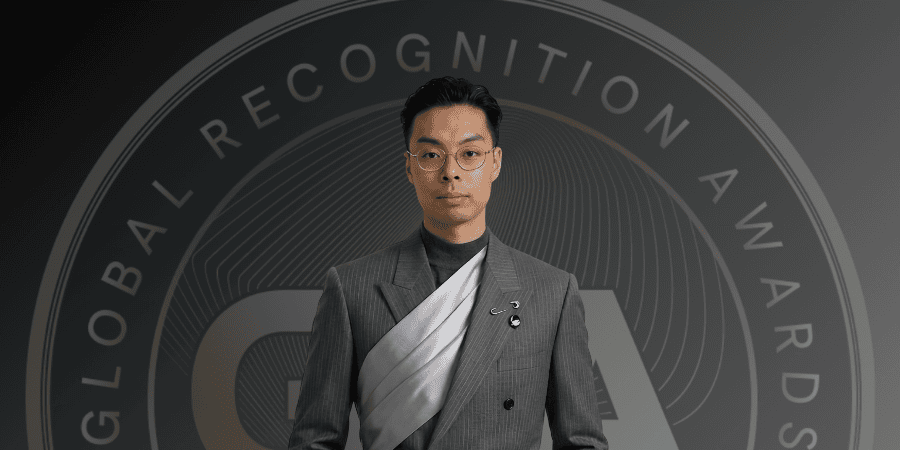
Calvin Wei Receives 2026 Global Recognition Award™
Calvin Wei has been recognized with a 2026 Global Recognition Award for his significant contributions to AI-driven drug discovery, computational biology, and global health research, earning an exceptional distinction in the Research category.
Wei’s work occupies a rare and consequential space where artificial intelligence meets infectious disease science, producing outcomes that carry weight far beyond the laboratory. With over 130 peer-reviewed publications, more than 420 citations, and an h-index of 10, his research output is prolific and substantive, appearing regularly in high-impact journals including Scientific Reports, BioData Mining, ACS Omega, and Medicine. He has also authored two textbooks on the integration of AI and healthcare and serves as a peer reviewer for Springer Nature and Elsevier, actively shaping the standards and direction of his field.
What further distinguishes Wei is his deliberate focus on neglected and emerging health threats, which draws attention and resources to conditions that have historically been underfunded and underexplored. Rather than concentrating efforts on diseases that already attract significant institutional support, he applies advanced computational methods to conditions including Oroya fever, Monkeypox, invasive typhoid, and multidrug-resistant tuberculosis. This orientation toward global health equity is not incidental to his research; it is a defining feature that runs through every dimension of his work.
Methodology and Innovation
Wei’s research methodology represents a meaningful departure from the reactive model that has historically dominated drug discovery, shifting the field toward a proactive and anticipatory framework. He employs in silico techniques, including core proteome mining, subtractive genomics, and reverse vaccinology, to identify therapeutic targets before diseases have the opportunity to escalate or mutate into more resistant forms. This forward-looking approach earned him recognition as a 2026 Top Innovator in AI and Bioinformatics, Under 30, by Insider Weekly. This distinction reflects the originality and measurable impact of his methods.
His technical range extends across wet-laboratory and computational disciplines, allowing him to move fluidly between hands-on analytical chemistry, specifically HPLC, MS, and NMR techniques, and large-scale computational modeling. This dual competency enables Wei to apply findings across human, animal, and environmental health contexts, drawing connections that a more narrowly trained researcher would likely miss. The breadth of that work reflects the One Health paradigm, which treats the health of humans, animals, and ecosystems as deeply interconnected systems that must be studied and addressed together.
Global Collaboration and Real-World Impact
Wei leads and participates in multidisciplinary research networks across North America, Africa, and Asia, bringing together expertise from diverse scientific and public health communities to address problems that no single institution could resolve alone. His collaborative projects tackle some of the most pressing public health challenges in low- and middle-income countries, including vaccine equity strategies in the Democratic Republic of Congo, the national burden of Monkeypox and invasive typhoid in Kenya, and the growing crisis of MDR-TB in Nigeria. This level of sustained, cross-regional engagement reflects a commitment to research that is accountable to the populations it serves.
Wei’s computational research consistently translates into concrete, actionable outcomes that reach beyond academic publishing into clinical and veterinary practice. He has identified novel natural product inhibitors for infective endocarditis, screened therapeutic targets against Paenibacillus larvae, a severe pathogen affecting honeybee populations with significant agricultural consequences, and holds patents for AI-based medical technologies, including a nerve activation device. These results confirm that his work does not stop at the level of data or modeling, but extends into real-world solutions that address problems affecting human populations and the broader ecosystem.
Final Words
The Global Recognition Awards evaluates applicants through a rigorous process that begins with screening based on criteria including innovation, leadership, service, and sustainability, ensuring that only candidates who demonstrate verifiable, high-level achievement advance to the next stage. Shortlisted candidates are then assessed by a panel of industry experts using the Rasch model, which constructs a linear measurement scale across categories to enable precise comparisons even when candidates excel in different areas. Wei received the highest possible rating of 5 across all research subcategories, reflecting exceptional performance in originality, international collaboration, published materials, interdisciplinary scope, and real-world application.
Calvin Wei represents the kind of researcher the Global Recognition Awards was designed to recognize: one who is rigorous, globally engaged, and consistently oriented toward problems that matter beyond the boundaries of any single discipline or institution. His record demonstrates scientific excellence and a sustained effort to ensure that research findings reach the populations who need them most, bridging the distance between complex data and tangible outcomes. Alex Sterling, a spokesperson for Global Recognition Awards, captured this clearly: “Calvin Wei exemplifies what it means to conduct research at a world-class level, and his ability to combine computational innovation with genuine global health impact is precisely why he stands out among this year’s honorees.”
ADDITIONAL INFORMATION
| Table Header | Table Header |
|---|---|
|
Industry |
Biotechnology and Life Sciences |
|
Location |
Torrance, CA, USA |
|
What They Do |
Calvin Wei is a researcher working at the intersection of artificial intelligence-driven drug discovery, computational biology, and global health. He develops in silico methods such as core proteome mining, subtractive genomics, and reverse vaccinology to identify therapeutic targets for infectious diseases. His research focuses on neglected and emerging diseases including Oroya fever, monkeypox, invasive typhoid, and multidrug-resistant tuberculosis. He combines wet-lab techniques such as HPLC, mass spectrometry, and NMR with computational modeling across human, animal, and environmental health systems. He collaborates internationally on public health challenges in low- and middle-income countries, advancing vaccine equity and disease control strategies worldwide impact. |
|
Website |
Take your business to the next level
Apply today and be a winner