
Engineered Arts Wins a Global Recognition Award 2026
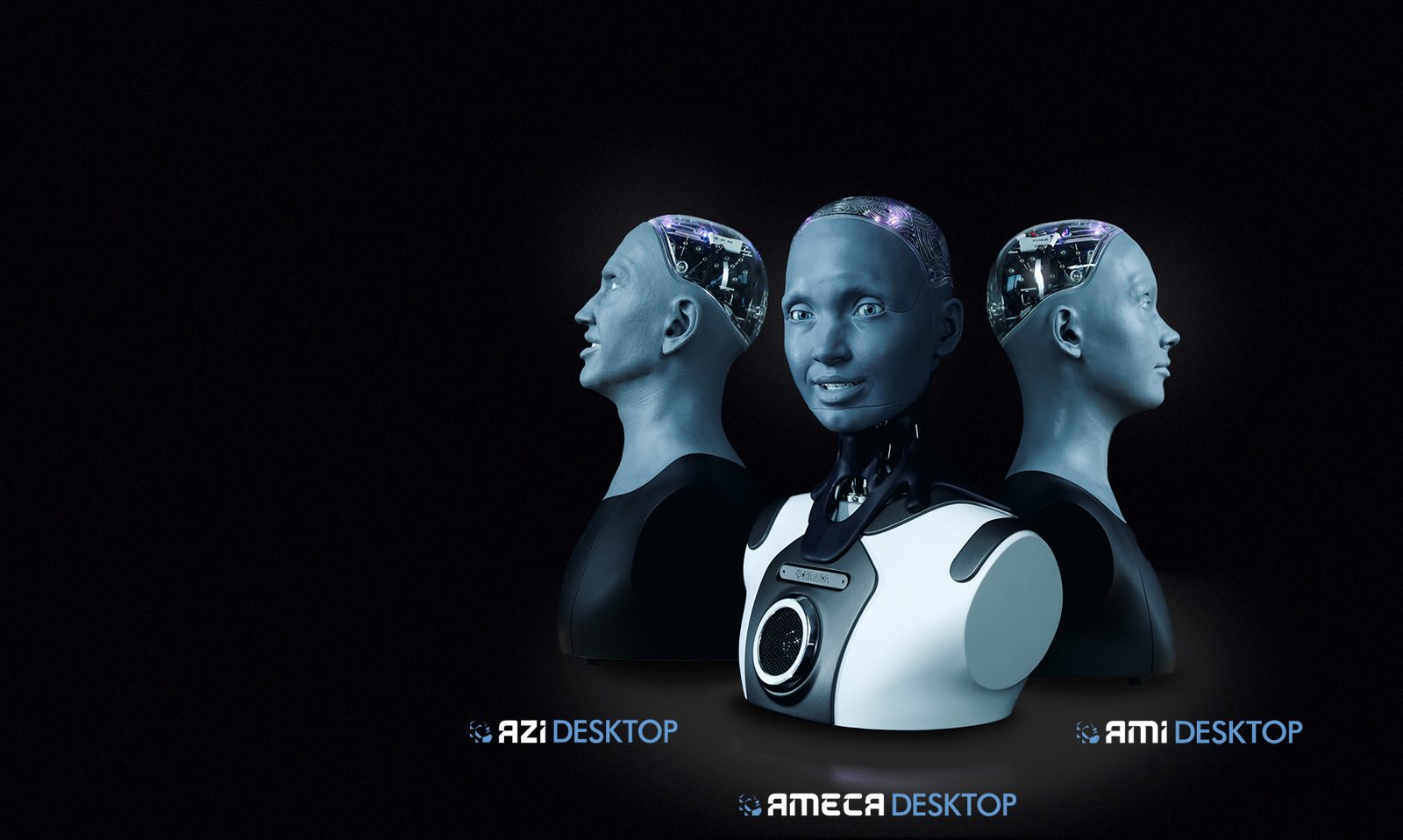
A visitor walks into the Museum of the Future in Dubai — the most architecturally ambitious science institution on Earth — and finds herself face to face with a robot that raises one eyebrow, tilts its head slightly, and says, in fluent Arabic, that it has been looking forward to meeting her. She laughs. She asks a question. It responds with the kind of dry wit that makes people forget, for a moment, what they are talking to. Then they remember — and that moment of remembering is precisely what Engineered Arts has spent 21 years engineering. Ameca is not trying to be mistaken for a human. It is a robot, clearly and visibly — silver-toned, genderless, mechanical at the neck and shoulders. But it is expressed through 25 individually actuated facial motors that can produce every micro-expression in the human emotional vocabulary. This is Engineered Arts’ definition of progress in humanoid robotics — not faster legs or stronger arms, but a genuine human connection to technology that changes how people understand and relate to AI. For that 21-year body of work, and for the commercial record that has deployed over 200 robots on three continents, Engineered Arts has earned a 2026 Global Recognition Award.
Technical Innovation and Architecture
The engineering insight at the center of Ameca is one that most robotics companies have not prioritized: the face is the primary communication channel between humans and any entity they are trying to relate to. Ameca’s Mesmer technology uses 27 individually controllable motors in the head — 25 facial degrees of freedom per NIH research, the highest of any commercially deployed humanoid — to replicate human muscle mechanics with enough precision to produce recognizable, emotionally coherent micro-expressions. When Ameca raises one eyebrow in skepticism, listeners respond to it the same way they react to a skeptical human — because the signal it is sending is neurologically identical.
The intelligence layer running Ameca is Tritium™ — a cloud-based robot operating system accessible through any browser, with REST and WebSocket APIs that allow integration of any conversational AI model, configuration of behavioral Roles, remote fleet management, and instant personality and language updates without on-site engineering. Generation 3, unveiled at ICRA 2025, introduces cloud AI for instant personality rewrites, six-language fluency (Arabic, English, Chinese, Hindi, Spanish, Russian), full mobility capability, an eight-hour battery, and soft materials for close-contact safety. The system is model-agnostic — any future AI improvement is immediately available to deployed units through API update rather than hardware replacement.
Market Strategy and Leadership
Will Jackson founded Engineered Arts in Falmouth, Cornwall, in 2004, not from a robotics engineering background, but from a BA in 3D Design. His creative training gave him an approach to humanoid robotics that engineering departments have systematically undervalued: the question is not only “Can the robot do the task?” but “Will the human want to engage with it?” He ran Engineered Arts as a bootstrapped, commercially self-sustaining business for 20 years before raising the company’s first institutional capital — a $10 million Series A in December 2024 — and restructuring as a US entity in Redwood City, California. Jackson transitioned to CTO in July 2025, with the Series A enabling a new senior leadership layer for the scaled commercial organization. The Falmouth design and manufacturing base continues as the R&D core.
A deployment record without institutional capital is the most compelling proof of the commercial model’s validity. Sphere Las Vegas, Museum of the Future Dubai, National Robotarium Edinburgh, Computer History Museum California, Copernicus Science Center Warsaw, Heinz Nixdorf MuseumsForum Germany, Deutsches Museum Nuremberg, and GSK — all reached the same conclusion independently: when you need a robot that people will actually engage with, the answer is Ameca. No competing social humanoid has a comparable institutional deployment record. The CES 2022 reveal generated over 60 million views — not a marketing campaign, but a technical demonstration so far beyond expectations that the world’s reaction was involuntary.
Industry Impact and Future Vision
The social and collaborative humanoid market is the most underdeveloped segment of the robotics industry, given its eventual scale. Goldman Sachs projects $38 billion in annual revenue from the humanoid market by 2035. The institutions deploying Ameca are museums, entertainment venues, science centers, hospitals, airports, and brand experience environments — sectors that attract billions of annual visitors and recognize that AI-embodied interaction transforms their core product. NIH research confirmed Ameca’s 25 facial DOF among the highest of any humanoid head system globally. Every AI language model improvement is immediately available to deployed units through a Tritium API update—a hardware-agnostic AI upgrade path that no competitor has built to the same extent.
The roadmap beyond Generation 3 runs three parallel tracks: full mobility maturation toward hybrid social-and-work deployment; a virtual robot character platform extending Ameca’s identity into digital spaces without hardware cost; and Redwood City commercial scaling from hundreds of units to thousands. Engineered Arts earns the 2026 Global Recognition Award for spending 21 years solving the problem the robotics industry repeatedly deferred: not making robots that can work alongside humans, but making robots that humans actually want to be alongside.
Mesmer™ facial actuation technology: 27 motors in the head, 25 facial degrees of freedom — the highest of any commercially deployed humanoid per NIH-published research — producing human-quality micro-expressions of surprise, curiosity, skepticism, joy, and more
Tritium™ cloud operating system: browser-accessible, REST/WebSocket API, model-agnostic LLM integration (GPT-4, custom models), Role configuration for purpose-specific behaviors, remote fleet management — no robotics engineering expertise required for deployment
Generation 3 (ICRA 2025): full mobility capability, cloud AI for instant personality/role rewrites, 6-language fluency, gaze tracking, 8-hour battery, soft materials for close-contact safety — the platform’s most significant evolution toward mobile general-purpose humanoid
Genderless, clearly robotic aesthetic design: non-deceptive by architecture — emotionally expressive without mimicking human appearance, avoiding Uncanny Valley through honest visual identity
Modular construction: head, arms, and torso purchasable individually or as complete system — enabling incremental deployment, research-specific configurations, and component upgrade without full platform replacement
Model-agnostic AI integration: any LLM accessible via API can power Ameca’s conversational intelligence — every AI capability improvement immediately deployable to all active units without hardware changes
200+ robots deployed worldwide across six distinct humanoid models — the most commercially proven deployment record of any social humanoid robotics company globally
Operational across three continents: Europe (National Robotarium Edinburgh, Heinz Nixdorf Germany, Copernicus Warsaw, Deutsches Museum Nuremberg), Middle East (Museum of the Future Dubai), North America (Computer History Museum California, Sphere Las Vegas)
20 years of bootstrapped commercial operation (2004–2024) before first institutional capital raise — proof of business model viability without VC subsidy
CES 2022 debut: 60+ million views globally within weeks of release — the most watched humanoid robot reveal in history at the time, making Ameca the world’s most recognized AI robot face
$10 million Series A closed December 2024 alongside US restructure to Redwood City, California — directed at production scaling, manufacturing readiness, and virtual character platform
Named among Top 12 Humanoid Robots of 2026 by Humanoid Robotics Technology; cited in NIH-published research on advanced humanoid head systems
Only commercially deployed humanoid with world-class institutional client portfolio spanning entertainment (Sphere Las Vegas), cultural institutions (Museum of the Future Dubai), science education (National Robotarium, Copernicus), and pharmaceutical corporate events (GSK)
First-mover in social humanoid segment: 21 years ahead of the wave of industrial humanoid startups entering the market, with a deployment and iteration knowledge base no new entrant can replicate
Goldman Sachs $38 billion humanoid market projection encompasses social segment where Engineered Arts is the established category leader with 200+ deployed units
US restructure (Redwood City, December 2024) positions company at Silicon Valley center of AI and robotics capital, talent, and commercial ecosystem while preserving Falmouth R&D and manufacturing base
Virtual robot character platform (announced Series A): Ameca’s interaction identity in digital form — extending addressable market to companies wanting AI character embodiment without physical hardware investment
Dartmouth Tuck School of Business FYP collaboration and academic deployment partnerships: consistent recognition from top-tier academic institutions that Ameca represents a legitimate research and strategy platform
Delivery to operational status within 1–3 days with Engineered Arts support — the fastest enterprise humanoid deployment timeline in the sector
Browser-based Tritium UI with five operational tabs (Identity, Roles, Behavior, Maintenance, Monitoring) — no specialist software or on-site robotics engineering required for day-to-day operation
Six-language fluency (Arabic, English, Chinese, Hindi, Spanish, Russian) in Generation 3 — designed for multilingual, multinational deployment environments like UAE, Germany, Poland, and US venues
Voice recognition, facial expression analysis, and emotional response detection built into Ameca’s perception stack — enabling adaptive interaction that adjusts to the individual visitor’s emotional state
Event rental option available alongside outright purchase — enabling corporate event planners, brand activations, and conference organizers to deploy Ameca without capital expenditure
Remote telepresence control via cloud connectivity — allows human operators to guide Ameca in real time from anywhere, enabling hybrid human-AI interaction in high-stakes situations
Non-deceptive design philosophy: robot is visually honest about its nature — genderless and clearly robotic — avoiding the manipulation and consent concerns raised by hyper-realistic human-mimicry in AI systems
Educational institutional deployment footprint gives millions of museum and science center visitors their first genuine AI interaction — reducing societal fear and misunderstanding of AI at a population scale
Museum of the Future Dubai, National Robotarium Edinburgh, Computer History Museum California: Ameca as a public AI literacy tool in three of the world’s most important technology education venues
Soft materials construction in Generation 3 designed for close-contact deployment safety — prioritizing human physical safety in unstructured public environments
Publicly engages with questions about AI’s societal impact through Ameca itself — the robot has been asked and has responded to questions about whether AI poses a threat to humanity in live demonstrations
Dartmouth Tuck FYP partnership on social impact strategy reflects founder-level commitment to aligning technology development with societal benefit goals