
Benevolent AI Wins a Global Recognition Award 2026
A critically ill COVID-19 patient arrives in an ICU in early 2020. Doctors have limited options. Across London, BenevolentAI’s platform had already run 90 minutes of computation and flagged baricitinib — a drug approved for rheumatoid arthritis — as a candidate capable of reducing both viral entry and the dangerous inflammatory cascade that was killing patients. Three days of human expert validation confirmed the prediction. Clinical trials followed. The FDA issued an Emergency Use Authorization. Millions of patients received the drug years earlier than traditional repurposing timelines would have allowed. BenevolentAI, the London-based AI drug discovery company founded in 2013, has earned a 2026 Global Recognition Award for building the platform that made that possible — and for proving, with clinical evidence, that artificial intelligence can compress decades of pharmaceutical research into months.
Technical Innovation and Architecture
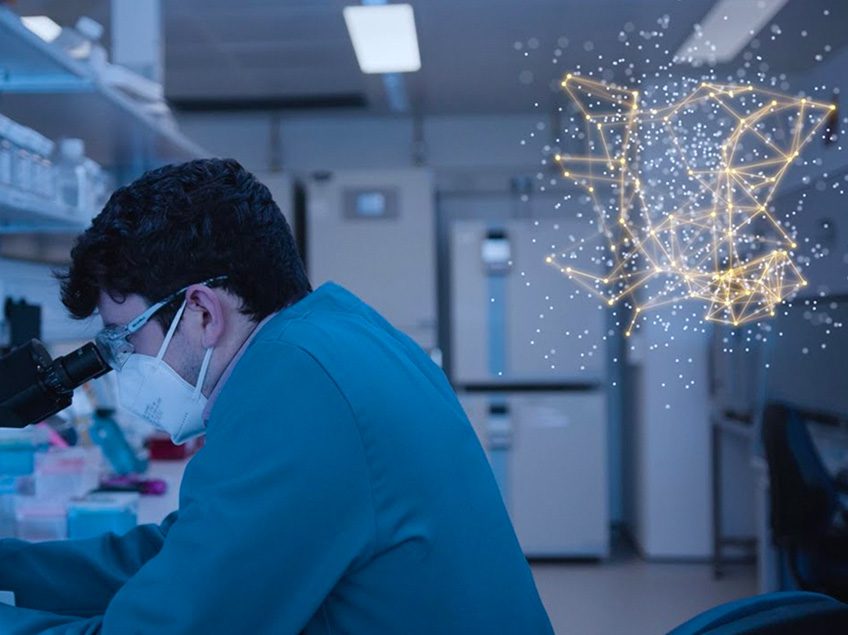
Traditional drug discovery moves in one direction: a scientist proposes a hypothesis, tests it, fails, and tries another. The process is sequential, constrained by what a human mind can hold in memory at once, and blind to patterns hidden across millions of data points. BenevolentAI‘s Benevolent Platform™ operates in a fundamentally different mode. The Benevolent Knowledge Graph maps billions of relationships between diseases, proteins, genes, drugs, biological processes, clinical trial outcomes, and scientific publications — not as isolated facts, but as an interconnected system that mirrors how biology actually works. This graph is not static. It rebuilds from scratch every few weeks, ingesting the latest data from genomics repositories, molecular databases, and peer-reviewed literature worldwide, and using AWS cloud infrastructure to process petabytes of updated information to surface connections that no research team, however large, could identify manually.
The platform’s AI suite spans the full discovery pipeline: target identification models analyze genomic, transcriptomic, and proteomic data to locate dysregulated pathways; drug repurposing algorithms scan approved molecules for new therapeutic indications; generative molecular design tools predict drug-like candidates with desired binding properties; and iterative learning systems record scientists’ decisions and feed them back into the model — each human judgment making the next prediction more accurate. What distinguishes the platform from competing approaches is its commitment to explainability. Rather than producing black-box outputs, the system generates confidence scores, biological evidence chains, and traceable reasoning paths. A pharmaceutical regulatory reviewer or clinical scientist can interrogate exactly why the AI flagged a particular target — a standard that opaque generative systems cannot meet, and one that defines the difference between an interesting computational tool and a trustworthy drug discovery partner.
Market Strategy and Leadership
Kenneth Mulvany did not found BenevolentAI during an AI industry hype cycle. He founded it in 2013 — five years before AI drug discovery became a venture capital category — having already built and sold Proximagen, a CNS drug development company, for $553 million. That pedigree gave the company a founder who understood both the biological science and the commercial mechanics of pharmaceutical development from day one. His return to the company as Executive Chairman in late 2024 signals a deliberate restoration of the original mission: platform-first, long-horizon drug discovery. The current leadership team includes CEO Dr. Joerg Moeller, CTO Dr. James Malone, Chief Business Officer Dr. Ivan Griffin, and Chief Scientific Officer Dr. Anne Phelan. This group combines deep AI engineering, pharmaceutical operations, and scientific credibility.
The commercial validation of the platform is written in partnership agreements, not in press releases. AstraZeneca, Merck KGaA, and Eli Lilly — three of the world’s top pharmaceutical companies — have each engaged BenevolentAI as a discovery partner. The revenue model is structurally scalable: the Knowledge Graph and AI models serve an unlimited number of pharma partners simultaneously without incurring proportional costs, making each new collaboration incrementally more profitable. Following the 2025 transition to private ownership via merger with Osaka Holdings, the company is shifting toward modular, standalone AI products that pharmaceutical partners can integrate into specific R&D workflow stages. This productization move broadens the addressable customer base and reduces per-engagement resource overhead.
Industry Impact and Future Vision
Drug development’s failure rate is not a niche problem. The standard figures are stark: a 90% clinical trial failure rate, an average cost of $2.6 billion per approved drug, and 10–15 years from target identification to patient access. BenevolentAI’s platform changes the inputs to that equation. Drug discovery accelerates from years to months. Repurposing candidates that would require years of sequential hypothesis testing is identified in hours. The wet-lab facility at Cambridge’s Babraham Research Campus closes the loop between computational prediction and experimental validation — without dependence on external lab partners. The clinical pipeline reflects this: BEN-8744 for ulcerative colitis reported positive Phase Ia safety data in March 2024, and BEN-2293 for atopic dermatitis advanced through Phase I/II targeting out-licensing.
Beyond the commercial pipeline, BenevolentAI has consistently deployed its platform capabilities for public benefit — collaborating with DNDi on dengue fever drug targets and sharing the identification of COVID-19 baricitinib openly to support global clinical validation. As the AI-in-pharma market grows at a projected 20% CAGR through 2029, BenevolentAI’s 12-year platform development history, validated clinical outputs, and full-spectrum discovery coverage — from target identification through candidate selection — give it a position that newer, narrower-function competitors will require years to approach. The 2026 Global Recognition Award reflects a company that has earned its standing not through announcements but through an FDA-authorized drug, three significant pharma partnerships, and a clinical pipeline built on a platform that has been getting smarter for over a decade.
Proprietary Benevolent Platform™ for end-to-end AI drug discovery.
Massive-scale “Knowledge Graph” mapping billions of biological relationships.
Advanced NLP for automated ingestion and interpretation of scientific literature.
Integrated “Dry-Lab to Wet-Lab” feedback loop for immediate biological validation.
AI-driven patient stratification to predict drug efficacy in specific populations.
Generative chemistry tools for the design of novel, high-affinity small molecules.
Identified Baricitinib as a COVID-19 treatment via AI, resulting in FDA EUA and saving lives.
Reduced the time for target identification from years to months.
Achieved multiple technical milestones in collaborations with AstraZeneca and Merck.
Managed a successful public listing (SPAC) and maintained a robust balance sheet.
Built a world-class laboratory facility in Cambridge, UK, to complement AI efforts.
Over $400M in total funding from a mix of venture, institutional, and public markets.
Major multi-year, multi-target strategic partnership with AstraZeneca.
Leadership pedigree with experience from Google, Facebook, and the UK Cabinet.
Focus on high-unmet-need areas like ALS, Parkinson’s, and immunology.
Market leader in the “AI-Biotech” category with a mature commercial roadmap.
Collaborative interface for drug hunters to interact with AI-generated hypotheses.
Transparent and “explainable” AI results that provide clear biological evidence.
Streamlined R&D workflows that allow scientists to focus on the most promising leads.
Faster path to clinical trials for internal and partnered drug candidates.
Committed to finding treatments for “neglected” rare diseases with high mortality.
Ethical AI governance and rigorous data privacy standards.
Promoting a more sustainable R&D model that reduces wasted clinical trial resources.
Open contribution to the global scientific community during health crises.