Avidbots Wins a Global Recognition Award 2026
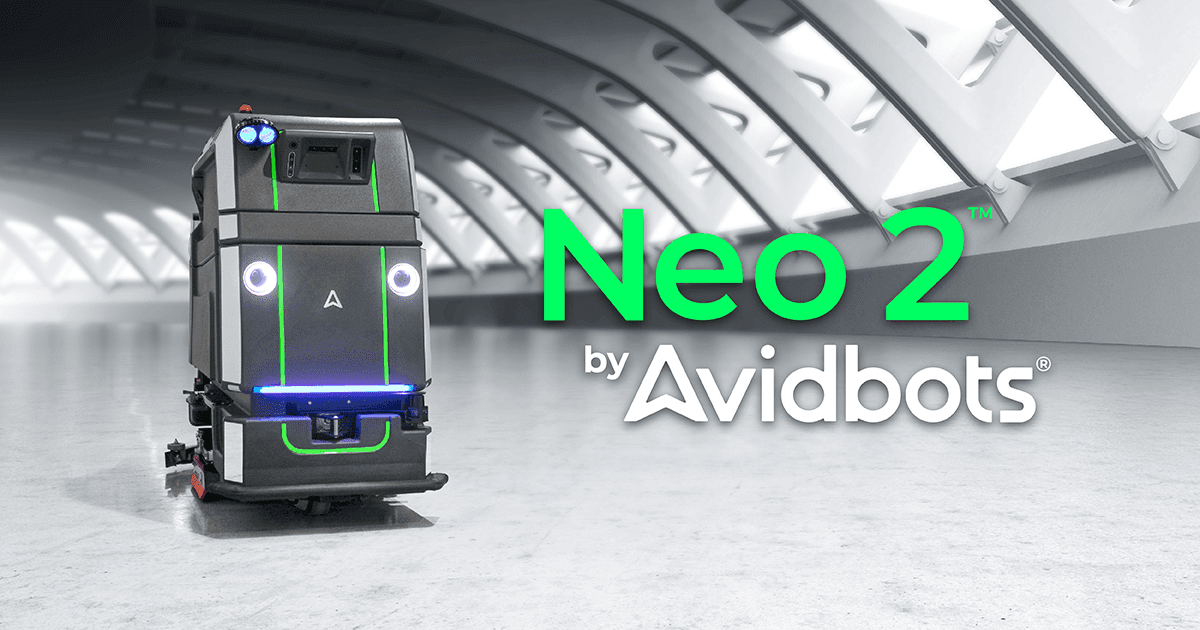
Every major facility has the same problem. Thousands of square meters of hard floor must be cleaned every day — regardless of staff availability, shift conditions, or traffic volume. Furthermore, floor scrubbing is one of the most physically demanding and difficult-to-staff service tasks in facility management. Manual cleaning is also inherently inconsistent. Avidbots built the answer. Specifically, three fully autonomous robots — Neo, Neo 2W, and Kas — powered by a single AI platform, deliver a consistent, clean finish without human intervention. Today, seven of the world’s top ten airports (Skytrax) deploy Avidbots Neo. 10 airports (according to The robots operate on five continents, in 12+ countries. Most importantly, they have doubled cleaning team productivity at every documented deployment. For that platform, Avidbots has earned a 2026 Global Recognition Award.
Technical Innovation and Architecture
Avidbots designs and manufactures its own robots from the ground up — hardware and software co-optimized by the same team. This is fundamentally different from retrofit solutions attaching AI to existing scrubbers. The result is Avidbots Autonomy — 15 sensors, advanced dynamic path planning, and 360-degree obstacle avoidance. Furthermore, Autonomy improves continuously through over-the-air updates. Consequently, every Avidbots robot gets smarter over time. Additionally, Avidbots Command Center provides real-time fleet monitoring, cleaning trend analytics, and 24/7 remote support — transforming floor care into a measurable, optimizable business function.
Three Robots, One Platform, Full Coverage
No single robot cleans every environment. Avidbots solved this with three purpose-designed platforms. Neo covers large-format terminals, malls, and logistics centers. Neo 2W is designed for warehouses and industrial surfaces. Kas, launched April 2024, navigates aisles as narrow as 41 inches with 15 sensors and 3+ hours of runtime. Furthermore, all three operate on a single Command Center platform. As a result, complete autonomous floor care coverage requires a single vendor, a single dashboard, and a single support relationship.
Market Strategy and Leadership
Pablo Molina and Faizan Sheikh met at the University of Waterloo, both BASc graduates in mechatronics engineering in 2011. They started with a retrofitted scrubber called Scrubby in a Kitchener hardware incubator. Today, they lead one of Canada’s fastest-growing robotics companies. Furthermore, they maintain an active research partnership with the University of Waterloo’s RoboHub — Canada’s premier robotics facility — continuously advancing Avidbots Autonomy. Sheikh leads commercial vision and investor relations; Molina leads product and technology. Consequently, their decade of joint leadership maps directly to the company’s two core success pillars.
Capital Structure and Airport Validation
The $70 million Series C, led by Jeneration Capital in September 2022, brought total funding to $107+ million across ten institutional co-investors. Furthermore, the airport validation record is unmatched in any service robotics category: seven of the world’s top ten airports (Skytrax) deploy Neo — including Singapore Changi, Tokyo Haneda, Zurich, and Paris Charles de Gaulle. Additionally, the top two cleanest airports globally use Avidbots. Consequently, every airport operator globally evaluates autonomous cleaning against the standards set by the world’s best airports — and those airports have chosen Avidbots.
Industry Impact and Future Vision
The commercial cleaning labor market is not recovering. Service sector labor shortages and physical attrition create a structural gap that hiring alone cannot close. Furthermore, post-pandemic consumer expectations for visible facility cleanliness have made autonomous cleaning a competitive differentiator. Consequently, Avidbots sells the infrastructure for a new standard — consistent, measurable, data-driven, and independent of staffing variability.
The roadmap targets US market expansion, multi-robot customer upsell, and continuous Autonomy improvement through the Waterloo RoboHub partnership. Most importantly, the robots Pablo Molina and Faizan Sheikh built from a childhood dream and a retrofitted scrubber are now cleaning the floors of the world’s most-traveled airports — every night, without interruption, without fatigue, without variation. Avidbots earns the 2026 Global Recognition Award for building the autonomous cleaning platform that the world’s most demanding facilities depend on.
Avidbots Autonomy AI platform: 15 sensors per robot, advanced dynamic path planning, 360-degree obstacle avoidance — proprietary hardware-software co-design that retrofit solutions cannot replicate
Over-the-air software updates: unlike fixed-program scrubbers, Avidbots robots improve continuously with every update — Autonomy gets smarter after deployment, not just at purchase
Three-robot family: Neo (large commercial), Neo 2W (warehouse/industrial), Kas (compact retail/healthcare) — full-environment coverage from one architecture, one API, one Command Center
Kas 15-sensor array (2024): advanced dynamic planning, obstacle avoidance, 41-inch minimum aisle width, 3+ hours LFP battery runtime, 90 lbs cleaning downforce — compact robot with full-size intelligence
Avidbots Command Center: real-time fleet monitoring, historical analytics, cleaning plan optimization, trend tracking, 24/7 remote support — transforming floor care from a cost into a measurable business function
360-degree visibility: no blind spots in any operating environment — enabling safe, continuous operation alongside people, forklifts, shopping carts, and unpredictable public obstacles
7 of the world’s top 10 airports (Skytrax 2022): Singapore Changi, Tokyo Haneda, Tokyo Narita, Seoul Incheon, Kansai, Zurich, Paris CDG — the most credible commercial cleanliness validation in any service robotics category
Top 2 cleanest airports globally use Avidbots: direct correlation between Skytrax cleanliness ranking and Avidbots deployment — the procurement case no airport operator can ignore
Doubled cleaning team productivity at documented customer deployments: the single most commercially significant operational metric in autonomous commercial cleaning
Five continents, 12+ countries deployed: global service and support infrastructure in place — not a North American product seeking international expansion
$107M+ total raised: seed through Series C led by Jeneration Capital — 10 institutional co-investors including True Ventures, GGV Capital, Next 47, BDC Capital, and BMO Capital Partners
Good Design Award + iF Design Award for Kas (2024): industrial design recognition confirming approachability as a designed-in property — robots that feel safe and welcome in public environments
US market expansion as Series C primary priority: world’s largest commercial real estate market as the next wave of Avidbots commercial growth
Three-robot upsell architecture: every customer deploying Neo is a candidate for Neo 2W and Kas — expanding contract value without new customer acquisition cost
University of Waterloo RoboHub research partnership: Canada’s deepest robotics talent pipeline continuously advancing Avidbots Autonomy — academic-industry collaboration at a cost structure no in-house R&D team can match
Jeneration Capital investment thesis: Avidbots “lessens employee workload and fatigue levels from laborious work” — explicit labor augmentation, not displacement, as the commercial design principle
Kitchener-Waterloo tech corridor manufacturing base: same ecosystem as BlackBerry and OpenText — Canadian sovereign manufacturing with North America’s strongest mechatronics engineering talent pipeline
BDC Capital portfolio company: Canada’s federal development bank co-investing across multiple rounds — national industrial policy conviction in Avidbots as Canada’s commercial robotics champion
One Command Center for the full fleet: Neo, Neo 2W, and Kas managed from a single dashboard — no multi-system complexity regardless of how many robot types or locations deployed
24/7 remote assistance standard: Avidbots support team monitors and assists any robot in the fleet remotely — no on-site technician required for most operational interventions
Cleaning plan optimization: Command Center algorithms optimize routes per facility layout, cleaning schedule, and traffic pattern — maximum coverage per runtime hour
Full-color rear touch screen: robots self-controlled via large on-body display — operators launch, configure, and monitor without a separate device or training program
Compatible with existing cleaning operations: robots augment existing staff workflows rather than replacing them — integration is additive, not disruptive
Real-time and historical reporting: Command Center tracks coverage area, cleaning time, distance traveled, and performance trends — the data foundation for facilities management optimization
Labor augmentation model: robots handle physically fatiguing floor scrubbing; cleaning staff reallocated to high-touch areas, customer interaction, and quality oversight — no job elimination, morale improvement
CVG Airport case study: Neo deployed “to supplement housekeeping and improve working conditions” — explicit documented statement that Avidbots deployment improved staff well-being, not headcount reduction
Faizan Sheikh immigration story: born in Pakistan, immigrated to Canada at 14, completed Waterloo engineering, built a $107M+ global robotics company — a founding story that represents Canadian immigrant entrepreneurship at its highest level
Physical fatigue reduction: commercial floor scrubbing causes long-term musculoskeletal injury; Avidbots robots eliminate the repetitive physical strain that manual scrubbing imposes on service workers
Consistent hygiene in public health environments: autonomous cleaning in hospitals, schools, and airports delivers measurable cleanliness standards that protect public health independently of staffing availability
Canadian manufacturing: designed and built in Kitchener, Ontario — domestic Canadian supply chain for a globally deployed commercial robotics platform