
WINNER 2026
Charles Deigh Celebrates 2026 Global Recognition Award™

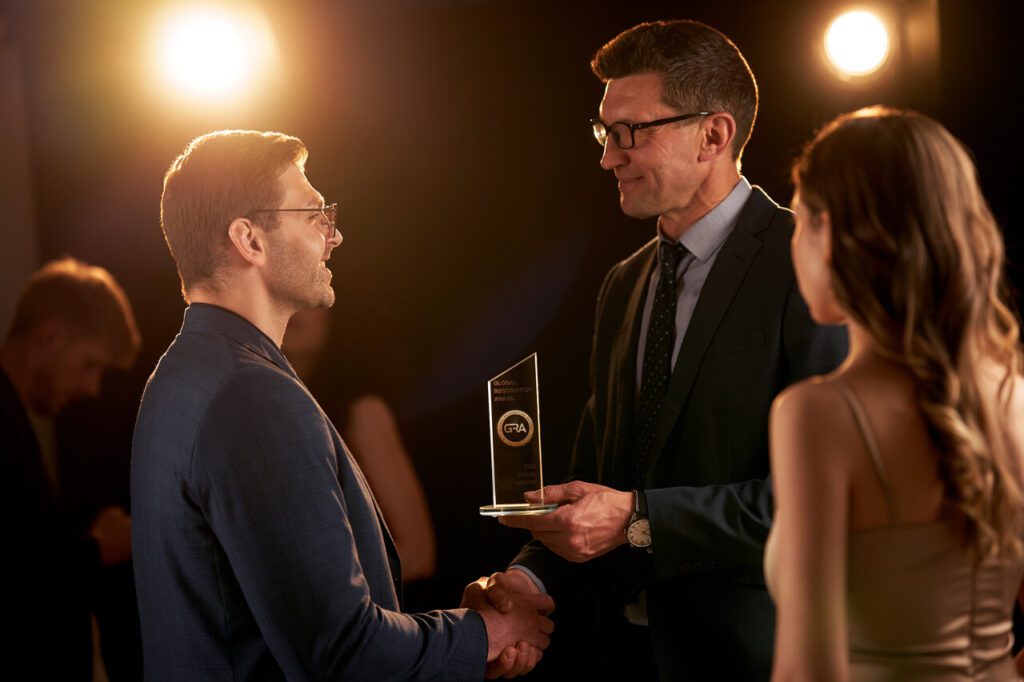
Charles Deigh Receives 2026 Global Recognition Award™
Charles Deigh has been recognized with a 2026 Global Recognition Award for turning complex petroleum engineering challenges into precise, operational results across Nigeria’s oil and gas sector. Over more than 15 years, Deigh has led upstream projects valued at over ₦2 billion, delivering significant value through brownfield optimization, reservoir management, and production improvement initiatives that restored deferred production and extended asset life. His leadership combines rigorous technical analysis with structured organizational practice, and this combination has made him a reliable reference in production optimization and asset delivery across an industry facing rising technical and operational demands.
Deigh’s recognition comes after a structured evaluation process in which applicants are graded from 1 to 5 across multiple dimensions, and shortlisted candidates are then assessed using the Rasch model, which creates a linear measurement scale that allows precise comparisons between applicants who excel in different categories. His scores show consistent strength in leadership, service, research, innovation, teaching, and mentoring, indicating that his contributions are not confined to a narrow specialty but extend across technical work and talent development. The award confirms that Deigh operates at a sustained high level where engineering judgment, ethical responsibility, and the training of others support better asset performance and a more capable workforce.
Engineering Leadership That Delivers Results
Deigh coordinates reservoir, production, facilities, and operations teams across onshore and offshore assets, and he achieves sustained production uplift by guiding decisions that link subsurface understanding with surface constraints and export readiness. His leadership has supported the consistent achievement of production targets. He has improved the pace and quality of well and facility interventions by structuring the use of digital dashboards, real-time surveillance, and integrated planning tools that give teams a clear view of operational priorities. This approach strengthens accountability and clarity across asset teams, because engineers and operators can see how their daily choices affect long-term field performance and safety.
His focus on operational reliability includes firm attention to health, safety, security, and environmental performance, which he ties directly to production continuity and stakeholder confidence. Deigh contributes technical advisory work for environmental remediation discussions and community-related initiatives in the Niger Delta, aligning operational plans with regulatory standards and local expectations through informed dialogue and practical recommendations. His work reduces operational inefficiencies and environmental exposure simultaneously, showing that careful engineering and community-aware planning can support one another rather than pull in different directions.
Innovation Rooted In Research And Practice
Deigh’s contribution to innovation rests on his ability to convert complex production data into practical guidance by applying data analytics, integrated asset modeling, and artificial intelligence-supported surveillance to identify untapped production potential and emerging risks. He has introduced real-time dashboards and structured trend analysis that refine well performance diagnostics, artificial lift optimization, and surface network balancing, so decisions on interventions and maintenance are grounded in continuously updated information rather than static assumptions. These tools help operators anticipate constraints before they become losses and systematically improve planning for workovers, recompletions, and facility debottlenecking.
His work is anchored in research-informed practice that links academic training with field realities, particularly through ongoing studies in reservoir performance, decline management, water and gas handling, and integrated reservoir–well–facility optimization. Deigh uses these studies to shape surveillance frameworks and production optimization workflows that improve forecasting confidence and recovery factors across multiple assets, and he applies them with careful attention to implementation details and follow-up. The result is a style of innovation in which new methods are presented as clear procedures and standards, embedded in routines that engineers and operators can follow, measure, and refine over time.
Teaching And Mentoring Across Generations
Deigh treats teaching as a structured extension of his engineering practice, designing knowledge-sharing sessions and workshops that turn complex subsurface and production concepts into practical lessons for early-career engineers and students. His sessions emphasize data interpretation, operational best practices, and the disciplined use of engineering judgment, so participants understand not only what to do but also why specific decisions matter in the field and in the control room. This approach improves student learning outcomes and strengthens new professionals’ readiness to handle real-world challenges in reservoir surveillance, artificial lift, and field operations without relying solely on trial and error.
His mentoring record demonstrates breadth and depth, as he has supported a diverse group of mentees who now hold senior engineering, supervisory, and asset-leadership roles across Nigeria’s oil and gas sector. Deigh develops mentoring frameworks that focus on technical competence, structured decision-making, and professional ethics, and he remains engaged long enough for mentees to apply what they learn in progressively more demanding roles. The consistency of their progress indicates that his influence extends beyond individual projects, because it shapes the habits, expectations, and standards of the teams and organizations where his mentees now work.
Final Words
Charles Deigh’s career shows how focused engineering work can also support broader goals of national energy security and economic stability, since every optimized reservoir, stabilized asset, and improved production system contributes to a reliable supply and better use of existing fields. His commitment to responsible energy development includes attention to operational safety, regulatory compliance, and the concerns of host communities, and he brings the same analytical discipline to these issues that he applies to subsurface studies and production planning. His path shows that technical strength, when joined with steady leadership, can create durable value for operators, stakeholders, and regions that rely on critical infrastructure.
His ongoing aim is to raise engineering standards, expand the skills of emerging professionals, and support sustainable hydrocarbon development across Africa through clear, consistent practice rather than dramatic gestures or language. Deigh continues to mentor engineers, refine digital and analytical tools, and promote a culture in which performance and responsibility are assessed together, reinforcing the basis on which he received a 2026 Global Recognition Award. “Charles Deigh exemplifies how careful and disciplined engineering can deliver immediate operational gains and lasting improvements in how the industry works,” said Alex Sterling, spokesperson for Global Recognition Awards, who noted that the award reflects not only his record to date but also his capacity to contribute further in the years ahead.
ADDITIONAL INFORMATION
| Table Header | Table Header |
|---|---|
|
Industry |
Oil and Gas |
|
Location |
Nigeria |
|
What They Do |
Charles Deigh is a Senior Petroleum Engineer operating in Nigeria’s upstream oil and gas sector. He leads reservoir engineering, production optimization, and asset management initiatives across onshore and offshore fields, coordinating teams to maximize hydrocarbon recovery from existing wells. His work focuses on brownfield optimization, which involves extending the productive life of mature oil and gas assets through data analytics, integrated asset modeling, and artificial intelligence-supported surveillance systems. Deigh conducts reservoir performance analysis, manages production decline, optimizes artificial lift systems, and implements real-time monitoring dashboards that improve operational decision-making. He also mentors engineering teams and contributes to community engagement and environmental compliance efforts in the Niger Delta region. |
|
Website |
|
Take your business to the next level
Apply today and be a winner