
Veriff Wins a Global Recognition Award 2026
In a single quarter in 2024, Veriff’s verification volumes grew by a factor that most identity companies don’t achieve in years. By December 2025, the company had tripled verification volumes, doubled annual revenue to over $100 million, achieved profitability, and reported 30x year-over-year growth in authentication, not because fraud got worse (though it did), but because the digital economy had fundamentally changed what identity verification is for. It was no longer a one-time compliance event at account opening. It had become the infrastructure of every transaction, every login, every moment of value exchange online. Every fourth person on the internet now uses Veriff’s services across multiple merchants per quarter. That is not a niche identity tool. That is the internet’s trust layer. For building that layer from Tallinn to New York with 99.6% accuracy, 12,500+ identity documents from 230+ countries, and a $100M+ profitable business growing at 80%+, Veriff has earned a 2026 Global Recognition Award.
Technical Innovation and Architecture
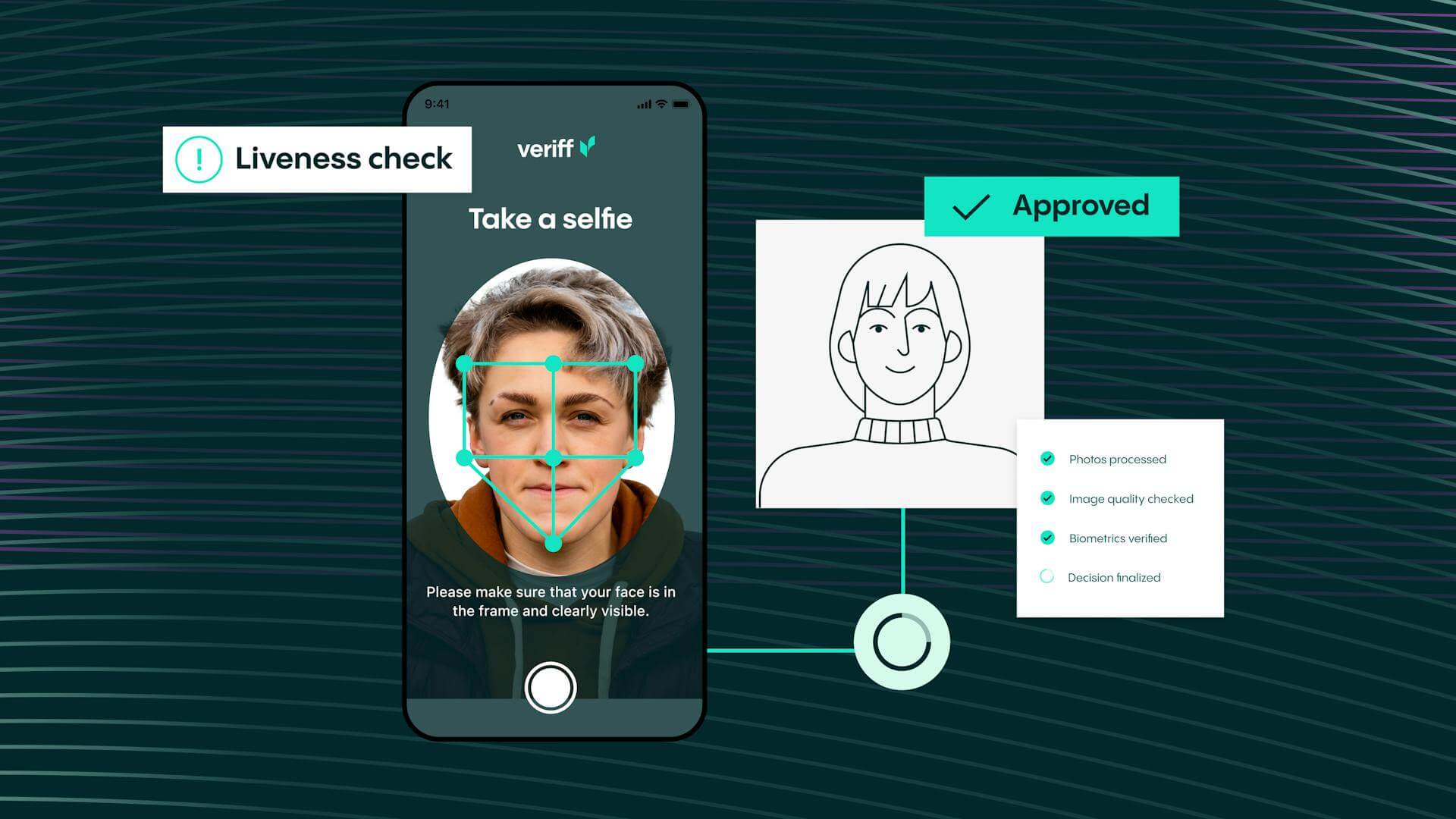
Veriff‘s AI-native platform analyzes over 1,000 signals per session, document optical character recognition, facial geometry mapping, passive liveness detection, behavioral biometrics, device and network fingerprinting, tamper pattern detection, and cross-merchant behavioral signals, to deliver identity verification decisions in under six seconds with 99.6% accuracy. The computer vision layer supports 12,500+ government-issued identity documents across 230+ countries and territories in 48 languages and scripts, making it the industry’s widest-coverage identity document library. The platform’s “Human on the Loop” architecture, where AI handles the primary decision layer and trained verification specialists observe and improve edge cases, creates a reinforced learning-from-human-feedback loop that continuously improves model accuracy as volume scales, without proportionally increasing headcount. The operational consequence: Veriff tripled verification volumes in 2025 while simultaneously improving accuracy and achieving profitability.
The June 2025 launch of AI-based Proof of Address extended the platform to include a KYC step that virtually every financial services, fintech, and regulated digital business must perform, but that previously required human review and took hours. Veriff’s PoA solution delivers decisions in under 30 seconds, with document tamper detection across 40+ languages, including Arabic, Cyrillic, Japanese, and Latin scripts, transforming a compliance bottleneck into an automated, sub-minute experience that reduces onboarding drop-off without compromising fraud detection. The platform architecture’s most significant 2025 evolution is the continuous authentication layer: the 30x year-over-year growth in authentication volumes reflects enterprises deploying Veriff not only for new user onboarding but at every login, payment, and high-risk transaction — converting Veriff from a KYC tool into the identity infrastructure layer of the entire digital customer relationship.
Market Strategy and Leadership
Kaarel Kotkas founded Veriff in Tallinn, Estonia, in 2015 at the age of 20, in the nation that had already built the world’s most advanced government digital identity infrastructure — the e-Residency program, the digital voting system, and a fully digitized civil service. The Estonian DNA embedded in Veriff’s architecture is not incidental; it is the founding context. Building identity infrastructure for hundreds of millions of people in a country with 1.3 million citizens taught Estonian engineers how to architect for accuracy and scale without proportional resource growth, the same constraint that defines Veriff’s “Human on the Loop” model. Y Combinator’s 2016 selection of Veriff provided the first institutional validation; Accel followed in Series B; Tiger Global and Alkeon co-led the $100 million Series C in January 2022 at a $1.5 billion valuation.
FY2025 results confirm the compounding growth trajectory: 80%+ profitable revenue growth in Q1 2025, accelerating from Q4 2024’s 75% pace; $100M+ in annual revenue with double-digit year-over-year revenue multiplication; 3,000+ enterprise customers across fintech, crypto, gaming, mobility, financial services, and digital marketplaces; and authentication volumes growing 30x year-over-year as the platform transitions from onboarding to continuous authentication. The 2025 opening of a Brazil tech hub, combined with geographic expansion into Latin America (2.5x volume growth in 2024, the fastest regional expansion), the Middle East, Africa, and APAC, diversifies Veriff’s revenue base into precisely the markets where regulatory fraud compliance demand is highest and where competitors with primarily Western document training have the lowest coverage quality.
Industry Impact and Future Vision
The identity verification market is growing as identity fraud accelerates. Synthetic identities, AI-generated deepfakes, document forgeries, and account takeover attacks have become cheaper and more accessible as large language models and image-generation tools commoditize the fraud playbook. Veriff’s response is platform-level: every session feeds the AI models, every merchant partnership adds to the cross-merchant behavioral intelligence layer, and every new document type trained into the system improves global coverage. The “global trust score” philosophy — articulated by Kotkas as getting smarter and more accurate with every session, enabling customers to onboard trusted people rather than verify documents — is the product vision that differentiates a platform company from a point-solution compliance tool.
The CyberSecurity Breakthrough Award naming Veriff “Overall Fraud Prevention Solution Provider of the Year 2025” is the competitive confirmation that the industry itself recognizes Veriff’s category leadership. The $100M+ revenue and profitability milestone, achieved simultaneously with 30x growth in authentication volume, confirms that the platform’s unit economics are not compressing as volume scales, the inverse of what happens in manual KYC operations. For building the identity infrastructure of the global digital economy from a founding office in Tallinn, achieving $100M+ revenue with doubled growth and profitability in 2025, and pioneering the shift from onboarding verification to continuous authentication as the new standard for digital trust, Veriff has fully earned the distinction of the 2026 Global Recognition Award.
AI platform analyzes 1,000+ signals per session — document OCR, facial biometrics, passive liveness detection, behavioral signals, device/network fingerprinting, and tamper pattern detection — delivering identity decisions in under six seconds with 99.6% accuracy.
12,500+ identity document types from 230+ countries and territories across 48 languages and scripts — the widest government-issued ID coverage of any publicly documented identity verification platform.
“Human on the Loop” RLHF architecture: AI handles primary decisions; trained specialists observe and improve edge cases, creating a continuous accuracy improvement flywheel without proportional headcount scaling.
AI-based Proof of Address (June 2025): delivers address verification decisions in under 30 seconds with document tamper detection across 40+ languages, transforming a manual KYC step into a sub-minute automated experience.
Continuous authentication layer: 30x year-over-year authentication volume growth in 2025 confirms the platform’s expansion from onboarding-only to transaction-level identity verification across every digital touchpoint.
Passive liveness and deepfake detection: platform identifies photo spoofing, video replay, and AI-generated deepfake attacks in real time, addressing the fastest-growing synthetic identity fraud vector.
$100M+ annual revenue achieved in 2025 with revenue doubling in a single year — a simultaneous scale and growth-rate milestone.
Q1 2025: 80%+ profitable year-over-year revenue growth, accelerating from Q4 2024’s 75% growth pace.
Q4 2024: 60% year-over-year increase in customer count; verification volumes tripled year-over-year.
Profitable as of 2025 — confirming that the “Human on the Loop” architecture delivers expanding operational leverage as volume scales.
Latin America volumes grew 2.5x in 2024 — the fastest-growing regional market, accelerating before the 2025 Brazil tech hub opening.
“Every fourth person” using Veriff’s services across multiple merchants per quarter globally — CEO Kaarel Kotkas, December 2025.
Named “Overall Fraud Prevention Solution Provider of the Year 2025” at the CyberSecurity Breakthrough Awards for the Proof of Address solution — third-party competitive recognition as the identity verification category leader.
3,000+ business customers globally spanning fintech, cryptocurrency, gaming, mobility, financial services, and digital marketplaces.
Self-described as “the fastest-growing company in the identity space” with a solid balance sheet and profitable growth focus — CEO Kaarel Kotkas, 2025.
$200 million raised across all rounds, including $100M Series C (January 2022) co-led by Tiger Global and Alkeon at $1.5 billion valuation; prior investors include Y Combinator, Accel, and IVP.
2025 geographic expansion: Brazil tech hub, Latin America, Middle East, Africa, APAC — diversifying revenue beyond primary North American and European markets.
Identity verification completes in under six seconds — orders of magnitude faster than manual KYC processes taking hours or days, directly reducing onboarding drop-off and improving conversion rates.
API and SDK deployment: integrates with any onboarding or authentication flow via iOS, Android, mobile web, and web SDK, with no change required to the client’s user interface design.
Full Auto and Hybrid tiers allow businesses to optimize for cost (Full Auto for high-volume, lower-risk use cases) or accuracy (Hybrid with specialist oversight for regulated, high-stakes verification).
Proof of Address reduces manual review time from hours to seconds, with 40-language support enabling global PoA deployment without document-type coverage gaps.
Self-Serve plans enable smaller businesses to access enterprise-grade identity verification without enterprise sales processes, lowering the barrier to identity verification infrastructure deployment.
Mission explicitly frames identity verification as social infrastructure: “making the internet safer for everyone” and “restoring trust to the internet” — not a compliance checkbox but a foundational commitment.
“Least friction for the honest” design principle ensures legitimate users are not penalized by security measures designed to stop bad actors — a direct accessibility and inclusion commitment.
12,500+ document coverage across 230+ countries means users from developing nations with non-Western document formats receive the same verification quality as Western passport holders — directly addressing demographic inequity in AI identity systems.
Brazil tech hub creates local engineering employment, local regulatory expertise, and local language model training that improves verification accuracy for Latin American users historically underserved by US-trained IDV systems.
GDPR, CCPA, SOC 2 Type II, and ISO 27001 compliance ensures biometric and identity data is handled to the highest available global privacy standards across all operating jurisdictions.