
Xanadu Wins a Global Recognition Award 2026
Inside a pharmaceutical research lab, a computational chemist submits a molecular simulation that would take a classical supercomputer three years to complete. Seconds later, a photonic quantum processor running at room temperature returns results that will accelerate a drug candidate to clinical trials 18 months ahead of schedule. This is not a theoretical use case; it is the operational promise Xanadu is delivering through Aurora, the world’s first scalable, networked, and modular photonic quantum computer. For building the hardware and software infrastructure that makes fault-tolerant quantum computing commercially viable, Xanadu has earned a 2026 Global Recognition Award. The Toronto-based company, the first pure-play photonic quantum computing firm to list on Nasdaq and the Toronto Stock Exchange under ticker XNDU, has validated a ten-year architectural thesis that light-based quantum computing will outscale every cryogenic alternative.
Technical Innovation and Architecture
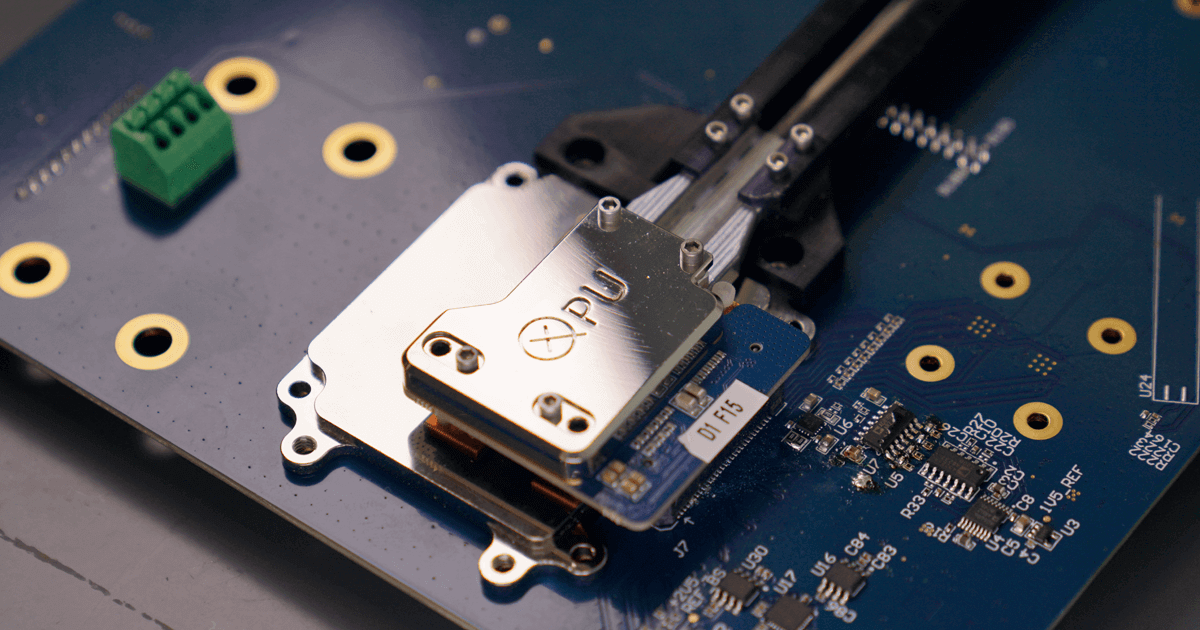
Xanadu‘s hardware architecture is built on photonic qubits, quantum information encoded in light rather than the superconducting circuits used by IBM and Google. This choice eliminates dilution refrigerators that cool competing systems to temperatures colder than outer space, replacing them with standard optical components that operate at room temperature. The structural consequence is significant: photonic systems connect through optical fiber rather than cryogenic wiring, enabling the modular, room-by-room hardware expansion that makes Xanadu’s one-million-qubit scalability roadmap physically achievable rather than theoretical. Aurora, the company’s flagship quantum system, integrates 35 photonic chips across 13 kilometers of optical fiber and marks the first time all subsystems required for universal fault-tolerant quantum computation have been unified in a single photonic architecture.
The error-correction approach Xanadu uses, Gottesman-Kitaev-Preskill (GKP) bosonic qubit encoding, embeds error correction at the physical qubit level rather than across large arrays of physical qubits, as in surface code methods. This reduces the number of physical qubits required per logical qubit, cutting the hardware overhead that has made fault-tolerant quantum computing impractical for IBM and Google at their current scale. Aurora has demonstrated real-time error syndrome extraction and feedback within the photonic architecture, validating all three pillars of fault tolerance: state preparation, error detection, and correction. Xanadu’s research supporting these milestones has been published in Nature multiple times, a peer-review threshold that fewer than a handful of quantum computing companies have crossed.
Market Strategy and Leadership
Founder and CEO Dr. Christian Weedbrook holds a PhD in Quantum Information Theory from the University of Queensland and completed postdoctoral research at MIT and the University of Toronto before launching Xanadu in 2016 following the sale of his prior quantum security company, Cipher Q. His decision to pursue photonics over superconducting qubits when the field was almost universally moving in the opposite direction reflects the long-horizon technical conviction that has defined Xanadu’s competitive positioning. The company’s go-to-market operates across three simultaneous channels: cloud-based quantum hardware access for enterprise and research users, PennyLane as an open-source software platform generating developer ecosystem gravity, and direct government and academic research partnerships that provide both revenue and scientific validation.
Xanadu’s March 2026 dual listing on Nasdaq and the Toronto Stock Exchange under ticker XNDU, completed via a business combination with Crane Harbor Acquisition Corp., raised $275 million in financing and established the company as the only publicly traded pure-play photonic quantum computing firm in global capital markets. The IPO proceeds are designated for building a next-generation, large-scale, fault-tolerant quantum computer. Government partnerships across Canada (CAD $23 million from Ottawa, CAD $3.75 million for PennyLane development), the United States (U.S. Air Force SEQCURE program through the University of Maryland’s ARLIS), and South Korea (ETRI partnership for fault-tolerant algorithm design) demonstrate that Xanadu has converted scientific credibility into defense and national security market access, a commercial pathway with contract structures and durability that consumer or enterprise SaaS markets rarely match.
Industry Impact and Future Vision
Xanadu’s platform addresses the computational ceiling that constrains pharmaceutical discovery, financial portfolio optimization, battery materials research, and logistics routing: problems classical computers cannot solve within practical timeframes at enterprise scale. A concrete example is the quantum algorithm developed by Xanadu in collaboration with the University of Toronto and the National Research Council of Canada to accelerate the discovery and analysis of battery materials, directly supporting the energy storage supply chain. In financial services, the Multiverse Computing partnership extends PennyLane’s reach into risk modeling and market forecasting for banking clients. PennyLane’s integration with Amazon Braket and its compatibility with IBM and Rigetti hardware give quantum developers a single Python-based framework that operates across every major quantum hardware vendor, removing platform lock-in as a barrier to enterprise quantum adoption.
Xanadu’s published hardware roadmap builds on Aurora toward a large-scale, fault-tolerant quantum computer capable of running circuits too complex for any classical system, with optical networking as the scaling mechanism and GKP encoding as the error-correction foundation. The Zero Trust security architecture being formalized through the SEQCURE program positions Xanadu’s technology within U.S. government security standards from the ground up, rather than as a retrofit. With a room-temperature hardware advantage, an open-source software ecosystem with cross-vendor compatibility, three Nature publications, and the first photonic quantum IPO in capital markets history, Xanadu has demonstrated that the path to commercially useful fault-tolerant quantum computing runs through photonics and that Xanadu leads that path. These achievements, taken together, fully justify the award of the 2026 Global Recognition Award.
Aurora integrates 35 photonic chips connected via 13 kilometers of optical fiber, marking the first complete prototype of a universal fault-tolerant photonic quantum computer.
GKP bosonic qubit encoding embeds error correction at the physical qubit level, reducing fault-tolerant hardware overhead versus the surface code methods used by IBM and Google.
Photonic architecture operates at room temperature, eliminating dilution refrigerators and reducing infrastructure cost compared to all superconducting and trapped-ion quantum competitors.
Modular optical networking design targets one million logical qubits through fiber interconnects, with no architectural redesign required as hardware expands.
PennyLane open-source library enables Python-based hybrid quantum-classical programming across Amazon Braket, IBM, Rigetti, and other hardware platforms from a single framework.
Three peer-reviewed publications in Nature, establishing scientific validation above virtually all quantum computing startups globally.
Borealis (216-qubit GBS device) achieved quantum supremacy in 2022, making Xanadu the first pure-play quantum computing company to reach this milestone.
Aurora demonstrated real-time error syndrome extraction and feedback within a single photonic architecture, validating all three pillars of fault-tolerant quantum computation simultaneously.
CAD $3.75 million government grant secured in February 2024 specifically for PennyLane development acceleration across optimization, machine learning, and cryptography applications.
ETRI partnership (South Korea) active as of March 2026 for fault-tolerant quantum algorithm design using PennyLane, extending the platform’s research adoption into Asia-Pacific.
TELUS partnership established for integrating Xanadu quantum processors with high-performance classical computing infrastructure for hybrid deployments
First pure-play photonic quantum computing company to list on both Nasdaq and the Toronto Stock Exchange (ticker: XNDU, March 27, 2026).
Total equity capital raised of $267.5 million, anchored by a $100 million Series B led by Bessemer Venture Partners in 2021.
$275 million in debt financing secured at IPO for building the next-generation large-scale fault-tolerant quantum computer.
CAD $23 million in Canadian federal government funding announced in late 2025, demonstrating sustained national strategic investment.
U.S. Air Force SEQCURE program partnership through University of Maryland’s ARLIS positions Xanadu within U.S. defense-grade quantum security standards development.
CEO Christian Weedbrook holds a PhD in Quantum Information Theory (University of Queensland) with postdoctoral research at MIT and University of Toronto
PennyLane’s Python-first, hardware-agnostic design allows quantum developers to write once and deploy across multiple quantum hardware vendors without platform lock-in.
Amazon Braket integration provides enterprise developers cloud-managed access to Xanadu’s quantum hardware through AWS’s established enterprise infrastructure.
PennyLane and Catalyst integration with the Munich Quantum Toolkit (MQT) from the Technical University of Munich, extending academic and enterprise usability across European research institutions.
Multiverse Computing partnership enables financial services clients to build quantum applications for risk modeling and market forecasting using PennyLane as the core programming layer.
Cloud-based access to quantum processors removes the need for on-premise quantum hardware deployment, enabling enterprise and research users to access photonic computing without capital hardware investment.
Room-temperature photonic operation eliminates the energy-intensive cryogenic cooling systems required by superconducting qubit competitors, providing a structural energy efficiency advantage.
Open-source PennyLane platform democratizes access to quantum computing tools for researchers and developers globally, reducing the concentration of quantum capability to well-funded incumbents only.
Zero Trust security architecture being formalized through the SEQCURE government program ensures quantum computing security standards are built proactively, not reactively.
Partnerships with the University of Toronto and the National Research Council of Canada on battery materials discovery algorithms directly support clean energy transition research.
Modular photonic hardware design reduces electronic waste associated with full-system hardware replacement cycles by enabling incremental chip-level upgrades.