
WINNER 2025
Rosemeire Gelcer Celebrates 2025 Global Recognition Award™

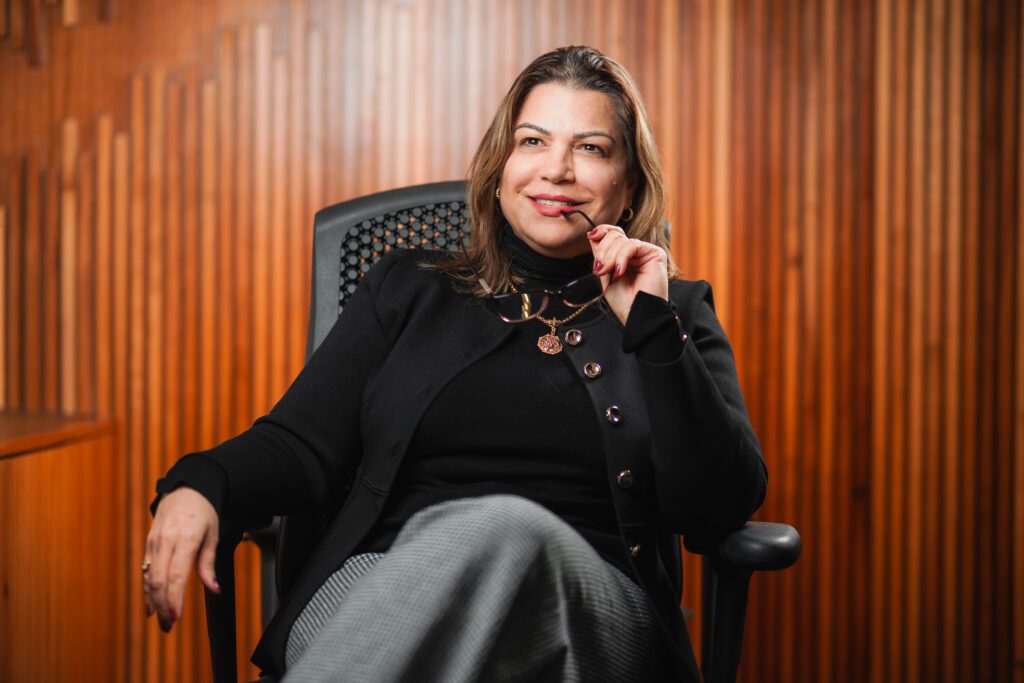
Rosemeire Gelcer Receives 2025 Global Recognition Award™
Rosemeire Gelcer has been recognized with a 2025 Global Recognition Award for her work establishing the legal framework for real estate tokenization in Brazil. Gelcer founded the School of Real Estate Tokenization, the first national educational initiative focused on preparing Brazilian lawyers for the tokenized economy. This effort positions the country to lead Latin America’s digital asset development in real estate and related financial services. Her work addresses critical gaps in blockchain law and digital property regulation at a time when Brazil is transitioning toward a tokenized economy, requiring legal certainty to support investment and development. Shortlisted applicants are evaluated using the Rasch model, which creates a linear measurement scale for each category, allowing for precise comparisons even when candidates excel in different areas.
Building Legal Infrastructure For Digital Assets
Gelcer’s work fills a fundamental need in Brazil’s developing digital asset sector, where regulation has accelerated but legal practice has struggled to keep pace with the technical and economic changes. The School of Real Estate Tokenization trains lawyers to navigate the intersection of property law, blockchain technology, and securities regulation within Brazil’s evolving framework for virtual assets, which assigns oversight to financial and capital markets authorities. Her approach treats tokenization as a legal problem as much as a technological one, because every tokenized property interest must be grounded in enforceable rights, compliance duties, and clear responsibilities for issuers and intermediaries.
The urgency of this work comes from the speed with which tokenization is moving from experimental projects into mainstream real estate and investment practices across Brazil. Market reports indicate that platforms are already digitizing significant volumes of real estate through fractional tokens, and this trend is expected to grow as institutional investors seek more liquid and granular exposure to property assets. Gelcer recognized that such growth, if not supported by clear legal frameworks and trained professionals, could expose investors to disputes, regulatory intervention, and contract execution failures that would undermine confidence in the sector.
Gelcer designs curricula that connect legal doctrine with practical deal execution, enabling lawyers to learn how to classify tokens correctly, structure offerings under securities rules, and integrate smart contract terms into enforceable agreements. The school emphasizes understanding how Brazilian property and contract law operate when ownership interests are recorded on distributed ledgers, as well as how custodial and transfer mechanisms must comply with national regulations governing digital assets and financial services. This structure helps ensure that tokenization projects are not simply technical experiments but properly constructed transactions that protect issuers and investors in a changing regulatory landscape.
National Impact On Legal Education And Practice
Gelcer operates on a national scale, working with lawyers from multiple regions in Brazil who confront real clients and ask how to tokenize real estate and related assets under existing law. The School of Real Estate Tokenization addresses a documented training gap, as most practitioners did not receive education in blockchain or digital asset regulation during law school and must now adapt to evolving client needs. Her courses integrate case studies from ongoing tokenization initiatives, regulatory guidance, and practical documentation, allowing participants to apply the material directly in their own practices.
This national reach is significant because Brazil has a large and diverse real estate market, and tokenization projects emerge in various economic and regulatory contexts, including residential, commercial, and agricultural properties. Gelcer’s work gives lawyers a common framework for analyzing tokenization structures, which helps reduce fragmentation and inconsistency in legal treatment across regions and institutions. The result is a more coherent professional response to digital real estate structures, which supports investor protection and facilitates dialogue with regulators who expect well-reasoned legal analysis from market participants.
Graduates of Gelcer’s programs are already participating in projects with developers, fintech platforms, and investment groups that use blockchain to represent fractional interests in property and related cash flows. These professionals are involved in tasks such as drafting offering documents, addressing investor rights, and defining how smart contract logic interacts with Brazilian law on default, enforcement, and transfer of interests. Their activity illustrates how targeted legal education can shift practice patterns in an emerging market, because it creates a cadre of lawyers who can identify legal risk and enable compliant development within existing regulatory boundaries.
Gelcer also contributes to public and professional debate, speaking and writing about tokenization, regulation, and investor safeguards in forums followed by lawyers, regulators, and market participants. Her analysis focuses on how Brazil can create space for technological development while maintaining standards of transparency, suitability, and financial integrity that protect buyers and sellers in tokenized structures. This public role reinforces her educational work, since it encourages a shared vocabulary and set of priorities among practitioners who are helping to define how digital assets fit into the broader legal and economic system.
Final Words
Gelcer’s recognition with a 2025 Global Recognition Award reflects her role in developing a legal framework that supports Brazil’s transition to tokenized real estate markets while maintaining investor safeguards and regulatory coherence. Her School of Real Estate Tokenization fills a structural skills gap, as it trains lawyers who can operate in traditional property and securities law, as well as the technical environment of blockchain-based assets, without treating these domains as separate worlds. The influence of this work extends beyond Brazil, as the legal frameworks and professional training developed for tokenized property in one primary Latin American market are closely monitored by practitioners and policymakers in neighboring jurisdictions that are considering similar approaches.
Rosemeire Gelcer combines a grounded understanding of Brazilian property and financial regulation with a working knowledge of blockchain protocols and token design, which allows her to translate complex technical concepts into legal structures that can withstand scrutiny from regulators and courts. Her educational model trains lawyers to interpret evolving rules on digital assets, apply them to concrete transactions, and advise clients on structures that meet compliance standards while enabling broader access to real estate investment opportunities. Alex Sterling, spokesperson for Global Recognition Awards, noted that “Rosemeire Gelcer’s exceptional contribution lies in recognizing that technological disruption requires legal infrastructure, and taking action to build that infrastructure through systematic education of the legal profession at a moment when Brazil is positioning itself as a global reference point for tokenization frameworks.” The School of Real Estate Tokenization now serves as a primary training ground for Brazilian lawyers entering the digital asset sector, ensuring that legal practice develops alongside technological change rather than reacting to problems that emerge.
ADDITIONAL INFORMATION
| Table Header | Table Header |
|---|---|
|
Industry |
Legal Services |
|
Location |
São Paulo, BRA |
|
What They Do |
Rosemeire Gelcer is a Brazilian attorney who founded the School of Real Estate Tokenization, the first national educational institution to train lawyers in handling blockchain-based property transactions. She develops legal frameworks and curricula that help practitioners navigate Brazil’s evolving digital asset regulations, particularly where property law intersects with securities rules and blockchain protocols. Her school addresses a skills gap in the Brazilian legal profession, preparing lawyers to structure compliant tokenization deals, draft enforceable smart contracts, and advise clients on fractional ownership models. Gelcer also contributes to public discourse on tokenization regulation, advocating for legal clarity that balances technological development with investor protection. |
|
Website |
Take your business to the next level
Apply today and be a winner