
Tractable Wins a Global Recognition Award 2026
A GEICO claims adjuster reviews her morning queue: 247 accident claims requiring damage assessment. Before Tractable, this would mean coordinating in-person inspections, waiting days for appraiser reports, and manually verifying repair estimates. Now, she watches as AI processes smartphone photos from policyholders, generating comprehensive assessments in seconds that identify damaged parts, severity levels, and repair costs with pixel-level precision. This change has propelled Tractable, a computer vision platform, to earn the 2026 Global Recognition Award for improving accident and disaster recovery across the automotive and property insurance industries. The 2026 Global Recognition Award for improving accident and disaster recovery across the globe. Since achieving unicorn status in 2021 with a $1 billion valuation following 600% revenue growth, Tractable processes thousands of daily claims for over 20 leading insurers and automotive companies, including GEICO, all major Japanese insurers, and LKQ, the world’s largest automotive recycler.
Technical Innovation and Architecture
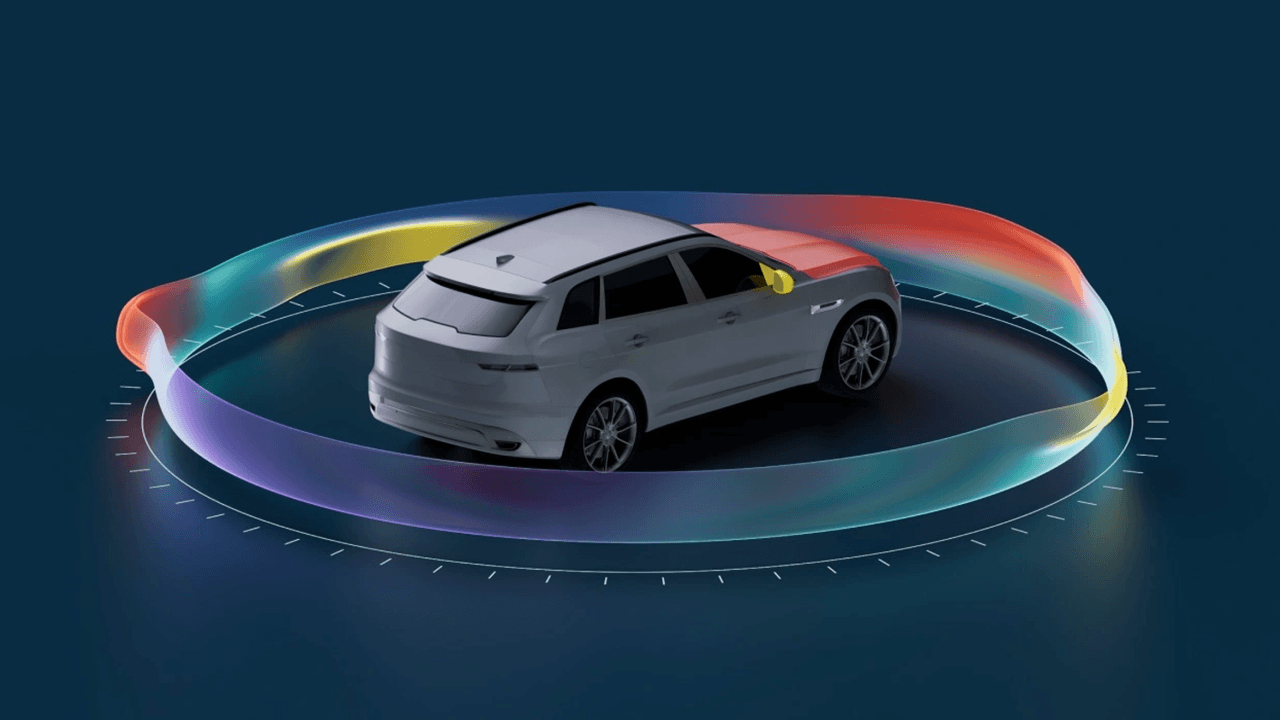
Tractable’s computer vision platform employs deep learning trained on hundreds of millions of vehicle and property damage images accumulated since 2014, creating a proprietary dataset that competitors cannot easily replicate. The AI analyzes images down to the pixel level, providing certainty scores that factor in visibility, image quality, and damage severity for each assessment. This technical approach enables end-to-end damage evaluation: identifying which vehicle parts have been affected and to what extent, generating complete estimates including recommended repair operations, paint and blend procedures, costs, and labor hours—tasks that human appraisers traditionally performed over days.
The platform’s architecture operates through mobile-friendly web apps and open APIs that integrate with insurers’ existing claims management systems, enabling adoption without infrastructure overhaul. Tractable’s AI Review product verifies estimate quality within seconds, processing 70% of claims without human involvement while flagging complex cases or potential inaccuracies for expert review. The recent launch of LumaScanner extends capabilities beyond insurance into automotive dealerships’ Fixed Ops departments, using AI to uncover hidden vehicle issues during inspections and maximize repair opportunities. This multi-industry approach demonstrates the platform’s adaptability across accident recovery, disaster recovery, and automotive service ecosystems.
Market Strategy and Leadership
CEO Alex Dalyac discovered deep learning in 2013 while taking Geoffrey Hinton’s Coursera course, six months before the field gained international attention, creating first-mover advantage in computer vision applications. Dalyac, an Imperial College London computer scientist and former quantitative analyst at a hedge fund, partnered with Razvan Ranca, a Cambridge machine learning researcher who published papers on reconstructing shredded documents and poker bots. Adrien Cohen joined as the third co-founder after the seed round, bringing entrepreneurial credentials from co-founding Lazada, a Southeast Asian e-commerce platform acquired by Alibaba for $3 billion. Cohen’s experience building and scaling a unicorn provided the business expertise to complement Dalyac and Ranca’s technical depth.
Tractable has raised over $180 million across multiple funding rounds, including a $60 million Series D in June 2021 led by Insight Partners and Georgian, which valued the company at $1 billion—making it the world’s first computer vision unicorn in financial services. The valuation was driven by 600% revenue growth over 24 months, driven by major customer wins including GEICO (17 million policyholders, the second-largest US auto insurer) and adoption across all major insurers in Japan. Series E funding of $65 million, led by SoftBank Vision Fund 2 in July 2023, accelerated expansion across auto and property ecosystems. The company’s strategy of announcing top-tier customers publicly created competitive pressure: once one major insurer adopted Tractable, competitors risked falling behind, driving adoption across entire markets like Japan.
Industry Impact and Future Vision
Tractable addresses the inefficiency of accident recovery, which requires in-person inspections, coordination among multiple parties, and sequential workflows that extend cycle times from days to weeks. By enabling instant visual assessments from smartphone photos, the platform changes claims processing: policyholders photograph damage, AI generates complete appraisals in minutes, and repairs begin immediately without waiting for adjuster visits. An Ageas UK spokeswoman stated their partnership with Tractable “evolved from a pilot in 2017 to a fundamental part of how the firm processes claims.” GEICO CEO Todd Combs credited the technology with helping “review estimates faster and more accurately” for millions of annual claims.
Beyond commercial applications, Tractable expanded its mission to include environmental sustainability and disaster recovery. The partnership with LKQ uses AI to analyze damaged vehicles at auction, identifying parts suitable for recycling and avoiding approximately 0.5 metric tons of CO2 emissions per vehicle. The platform’s home-damage appraisal capability helps families rebuild more quickly after natural disasters such as typhoons and hurricanes. Tractable created an AI disaster recovery fund in partnership with investor Georgian to deploy the technology to uninsured families, “regardless of whether they can pay,” funded by Ethereum cryptocurrency mined by an intern during the company’s earliest days. With computer vision capabilities spanning insurance claims, automotive service, salvage recycling, and disaster recovery, and a mission extending beyond profit to environmental and social impact, Tractable has established itself as critical infrastructure for visual assessment across industries—achievements that justify the 2026 Global Recognition Award.
Deep learning computer vision trained on hundreds of millions of vehicle and property damage images accumulated since 2014, creating a proprietary competitive moat
Pixel-level image analysis with certainty scores factoring visibility, image quality, and damage severity for accurate assessments
End-to-end damage evaluation generating complete repair estimates including operations, paint/blend procedures, costs, and labor hours within seconds
AI Review product processing 70% of claims without human involvement, flagging complex cases for expert review
Mobile-friendly web apps and open APIs enabling seamless integration with existing insurer claims management systems
LumaScanner innovation extending AI capabilities into automotive dealership Fixed Ops departments for uncovering hidden vehicle issues
600% revenue growth over 24 months, leading to $1 billion unicorn valuation in June 2021
Processes thousands of daily claims across global markets for over 20 leading insurers and automotive companies
70% of insurance claims reviewed and approved automatically without human adjuster involvement
Platform scales from individual smartphone photo assessments to enterprise processing of millions of annual claims
Geographic operations spanning the US, Japan, the UK, France, Spain, Poland, and with consistent accuracy across markets
Team growth from 2 founders in 2014 to over 300 employees by 2021
World’s first computer vision unicorn for financial services with $1 billion valuation achieved June 2021
Over $180 million raised across multiple rounds including $65M Series E led by SoftBank Vision Fund 2, Insight Partners, Georgian
CEO Alex Dalyac entered deep learning in 2013, six months before international attention, creating first-mover advantage
Co-founder Adrien Cohen previously co-founded Lazada (acquired by Alibaba for $3 billion), bringing unicorn-building experience
Major customer wins: GEICO (17M policyholders, #2 US insurer), all major Japanese insurers, LKQ (world’s largest automotive recycler)
Strategy of public customer announcements creating competitive FOMO driving adoption across entire insurance markets
Policyholders photograph vehicle damage with smartphones, receive instant AI appraisals in minutes without adjuster visits
Mobile-friendly web-based apps requiring no native app downloads, reducing friction for adoption
Claims processing cycle time reduced from days/weeks to minutes through elimination of in-person inspection bottlenecks
Ageas UK partnership “evolved from pilot in 2017 to fundamental part of how firm processes claims” per company spokeswoman
GEICO CEO Todd Combs credited technology with helping “review estimates faster and more accurately” for millions of claims
Repair shop owners using LumaScanner report uncovering more repair opportunities, building tighter dealer partnerships, and boosting customer trust
Partnership with LKQ recycler identifies salvageable parts from damaged vehicles, avoiding approximately 0.5 metric tons of CO2 per recycled car
Home damage appraisal AI helps families rebuild faster after natural disasters like typhoons and hurricanes exacerbated by climate change
AI disaster recovery fund created in partnership with Georgian to deploy technology to uninsured families “regardless of whether they can pay.”
Disaster recovery fund financed by Ethereum cryptocurrency mined by intern during company’s earliest days, now worth millions
Mission evolution from pure growth to “How we make a meaningful positive difference” per CEO Alex Dalyac
Transparency through certainty y scoring system providing confidence levels for each AI assessment, flagging ambiguous cases for human review