Kikunoi Honten Restaurant Receives a 2025 GLOBAL RECOGNITION AWARD
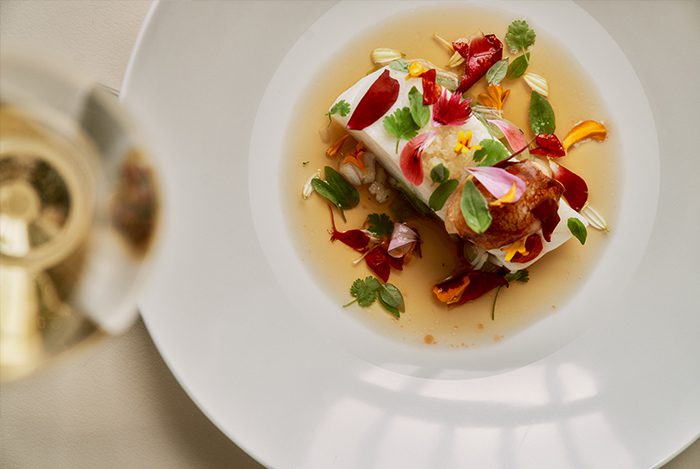
In the soft morning light of Kyoto’s Higashiyama district, a kimono-clad server glides across tatami mats carrying a lacquered tray containing Kikunoi Honten’s signature hassun course. The decorative stacked boxes, tied with pink cord, reveal spring’s arrival through tai red sea bream sushi wrapped in bamboo leaves, marinated greenling fry, and Kintoki red carrots arranged to evoke cherry blossoms. Each element draws from ingredients sourced across Japan and prepared with water from the historic Chrysanthemum Well, the same spring that inspired the restaurant’s founding over four centuries ago.
Kikunoi Honten has earned a 2025 Global Recognition Award, recognizing its significant contribution to preserving and advancing traditional Japanese cuisine globally. This distinction acknowledges the restaurant’s role as a dining destination and a cultural institution, maintaining three Michelin stars while serving as UNESCO’s primary advocate for washoku traditional cuisine. Since 1912, this establishment has functioned as both restaurant and living museum under the stewardship of the Murata family, with third-generation Chef Yoshihiro Murata working to elevate Japanese culinary culture internationally.
Culinary Mastery and Cultural Stewardship
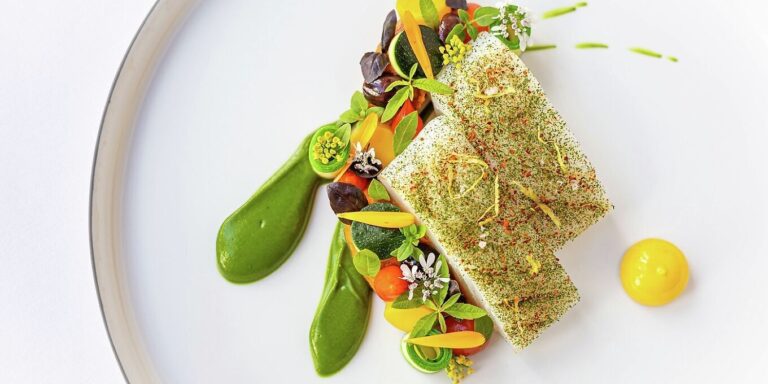
Kikunoi‘s culinary foundation operates like a seasonal symphony where each dish represents a movement in Japan’s ancient 24-season calendar. Chef Murata’s kitchen employs 35 specialized cooks who prepare dishes using traditional techniques unavailable elsewhere, including the dramatic bamboo shoot course that arrives on glowing charcoals with aromatic steam rising as the lid is lifted. The restaurant’s exclusive use of water from the 16th-century Chrysanthemum Well provides the foundation for all dashi preparations, while ingredients sourced directly from producers across Japan ensure authenticity in presentations like grilled guji tilefish with dried mullet roe breading served on ceramics by master artist Rosanjin.
Innovation within tradition manifests through Murata’s “mitate” philosophy – seeing something as if it were something else – transforming simple ingredients into evocative natural landscapes. The restaurant occasionally incorporates Western elements like foie gras and truffles while maintaining fundamental kaiseki structure, demonstrating flexibility without compromising cultural integrity. Seasonal menu development follows precise protocols where spring features bamboo shoots from Mount Hiei, autumn showcases matsutake from Nara, and winter highlights crab from the Sea of Japan, each ingredient selected for peak quality and prepared using centuries-old techniques perfected by the Murata lineage.
Service Excellence and Educational Mission
Service at Kikunoi goes beyond standard hospitality through kimono-clad staff who provide choreographed elegance while educating guests about each course’s cultural significance. The ten private dining rooms, each featuring different aesthetic approaches from traditional tatami arrangements to a European-style room with Napoleon III-era furniture, accommodate guests ranging from intimate couples to groups of fifty. Staff fluency in multiple languages ensures international visitors understand the philosophical depth behind presentations. At the same time, the restaurant’s training of foreign chefs from the US, UK, and Korea reflects Murata’s commitment to global culinary education.
The beverage program emphasizes seasonal sake selections from regional producers, with pairings designed to harmonize with specific courses such as shiizakana dishes that complement sake’s umami-rich profile. Service timing follows precise kaiseki protocols with courses arriving at orchestrated intervals to maintain the meal’s meditative flow. At the same time, monthly changes to flower arrangements and hanging scrolls reflect the ancient seasonal calendar. Guest testimonials consistently praise the educational value of the experience, with one visitor noting that “the staff provided detailed explanations in perfect English, making each course a cultural lesson as well as a culinary delight.”
Architectural Heritage and Global Impact
The restaurant’s architectural environment, constructed by renowned Nakamura Sotoji Komuten craftsmen in traditional sukiya style, occupies 3,000 square meters with meticulously maintained Japanese gardens designed to resemble waves with turtle sculptures. Ten private dining rooms are individual galleries showcasing rotating seasonal art, antique ceramics, and cultural artifacts that change monthly, creating an ever-evolving museum experience. One room frequented by Prince Hirobumi Ito during the Meiji Restoration maintains historical significance, while another, designed as a boat by Chef Murata, demonstrates the family’s artistic vision.
Kikunoi’s influence extends through Chef Murata’s leadership of the Japanese Culinary Academy and his instrumental role in achieving UNESCO Intangible Cultural Heritage recognition for washoku in 2013, elevating Japanese cuisine’s global profile. His appointment as UNESCO Goodwill Ambassador for Food Education and recognition with the American Express Icon Award for Asia’s 50 Best Restaurants show the restaurant’s cultural outreach efforts. The restaurant’s commitment to international training programs and Murata’s supervision of Singapore Airlines’ in-flight menu alongside Gordon Ramsay illustrate how traditional techniques inform contemporary applications worldwide.
Looking toward the future, Kikunoi continues advancing traditional kaiseki through educational initiatives and international partnerships while maintaining its role as guardian of Japan’s culinary heritage. The restaurant’s ongoing development of evaluation systems for Japanese cuisine skills ensures authentic techniques reach future generations of chefs globally.
Kikunoi Honten’s receipt of a 2025 Global Recognition Award represents more than culinary achievement – it acknowledges the restaurant’s vital role as cultural steward and global educator. For discerning diners seeking experiences that transcend mere consumption, this establishment offers proof that the highest levels of culinary artistry can coexist with serious cultural responsibility, creating dining experiences that educate, inspire, and preserve essential traditions for future generations.
Located at 459 Shimokawara-cho in Kyoto’s historic Higashiyama district near Kodaiji Temple and Yasaka Shrine
Occupies 3,000 square meters with meticulously maintained Japanese gardens designed to resemble waves with turtle sculptures
Built by renowned Nakamura Sotoji Komuten craftsmen in traditional sukiya architectural style
Ten private dining rooms function as individual galleries showcasing rotating seasonal art, antique ceramics, and cultural artifacts
Monthly changes to flower arrangements and hanging scrolls reflect Japan’s ancient 24-season calendar
One room frequented by Prince Hirobumi Ito during the Meiji Restoration maintains historical significance
Kimono-clad staff provide choreographed elegance while educating guests about each course’s cultural significance
Staff fluency in multiple languages ensures international visitors understand philosophical depth behind presentations
Service timing follows precise kaiseki protocols with courses arriving at orchestrated intervals to maintain meditative flow
Ten private dining rooms accommodate guests ranging from intimate couples to groups of fifty people
Different aesthetic approaches from traditional tatami arrangements to European-style room with Napoleon III-era furniture
Three Michelin stars maintained continuously since 2009 under Chef Yoshihiro Murata’s leadership
Kitchen employs 35 specialized cooks who prepare dishes using traditional techniques unavailable elsewhere
Exclusive use of water from the 16th-century Chrysanthemum Well provides foundation for all dashi preparations
Ingredients sourced directly from producers across Japan including bamboo shoots from Mount Hiei and matsutake from Nara
Signature hassun course features seasonal ingredients arranged to evoke natural landscapes and cultural narratives
Occasional incorporation of Western elements like foie gras and truffles while maintaining fundamental kaiseki structure
Dramatic presentations include bamboo shoot course arriving on glowing charcoals with aromatic steam rising
Monthly menu changes following traditional 24-season calendar with peak seasonal ingredients
Educational elements explaining cultural significance and preparation methods of each course
Beverage program emphasizes seasonal sake selections from regional producers with specific course pairings
Private dining rooms designed with different themes including one shaped like a boat by Chef Murata
Third-generation family ownership under Chef Yoshihiro Murata since 1993
Training program for foreign chefs from US, UK, Korea and other countries reflecting global culinary education commitment
American Express Icon Award for Asia’s 50 Best Restaurants 2020 and Michelin Mentor Chef Award 2024
Guest testimonials consistently praise educational value and cultural lesson aspects of dining experience
Chef Murata’s instrumental role in achieving UNESCO Intangible Cultural Heritage recognition for washoku in 2013
Leadership of Japanese Culinary Academy and appointment as UNESCO Goodwill Ambassador for Food Education
Direct relationships with producers across Japan ensuring sustainable ingredient sourcing practices
Development of evaluation systems for Japanese cuisine skills allowing global chef competency certification
International training programs and cultural outreach efforts through Singapore Airlines menu supervision
Location
459 Shimokawarmachi, Higashiyama-Ku, Kyoto 605-0825 Kyoto
RESTAURANT INFORMATION

| Table Header | Table Header |
|---|---|
|
Industry |
Restaurants/Fine Dining |
|
Location |
Kyoto, Japan |
|
Year Founded |
1912 |
|
Company Size |
51-200 employees |
|
Website |